

It is customary to give flowers at Easter. Unlike short-lived bouquets of cut flowers, potted plants have the advantage of offering extended flowering. Even better, by choosing a variety suited to your climate, your plant can find its place in the garden and return year after year.
Most of the potted flowering plants sold at Easter can easily be transplanted. This should be done once all risk of frost has passed and the soil has warmed and can be worked. Plants purchased in bloom are less likely to flower again the first year, but by following our tips, they will flower every year afterwards, and for a very long time.
How to choose a plant for your garden
Not all of the potted flowering plants sold at Easter are suitable for the garden. Some, originating from tropical countries or the Mediterranean region, will need to be grown as houseplants. Before transplanting your plant into the garden, make sure it is hardy in your area. If not, choose a variety that can survive and flower in your climate.
What to do before transplanting?
Just like seedlings and houseplants, your plant can't be moved to the garden overnight. It's essential to gradually acclimate it to outdoor conditions. Also, keep in mind that bulbs forced to bloom at Easter are unlikely to flower the first year. However, this is only a temporary setback. By following our recommendations, you'll enjoy guaranteed blooms for years to come.
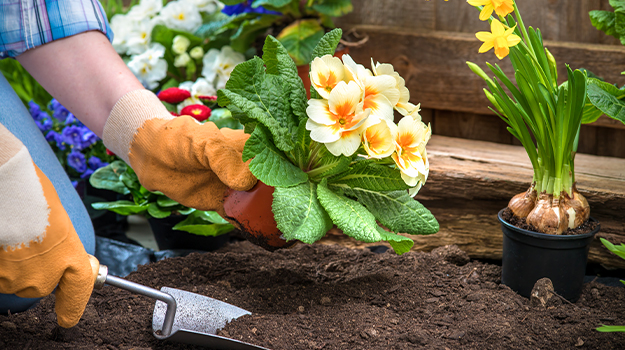
How to make Easter bulbs bloom again
Many of the varieties offered at Easter are bulbous plants. This is particularly true of tulips, daffodils and hyacinths. Here are 5 tips to follow to ensure your bulbous plants bloom profusely once grown in the garden.
- Cut off the faded flowers but never the leaves. Let them yellow and die on the plant. This allows the bulb to recharge and ensures the next flowering.
- Bulbs hate stagnant water, which can cause them to rot. Choose a location with excellent drainage. If necessary, raise the flower beds!
- Lighten the soil by incorporating compost and our All Purpose Mix.
- Encourage strong root development and abundant flowering the following year by adding bone meal to the planting hole. See our article for instructions on using BLOOMBOOST 4-10-0 in the garden.
- Before winter, in cold climates, cover the bulbs with 5 to 8 cm of organic mulch. Also use mulch in warm climates to reduce watering needs. Bulbs thrive better in drier soils.
Don't forget to mark the location of your bulbs. Once the foliage has completely dried out, it will be difficult to know where the bulbs are!
Tip: Plant your bulbs under dense-leaved perennials that are late to appear in spring, such as hostas, daylilies, astilbes or heucheras. The bulbs will bloom in your flower beds when they are bare, and your perennials, once they emerge, will save you the sad sight of their dying leaves!

How to grow the most common Easter plants in the garden
Many popular Easter flowers can be grown in the garden if they are suited to your climate. In this section, we present the methods for planting and caring for the main species to ensure flowering year after year.
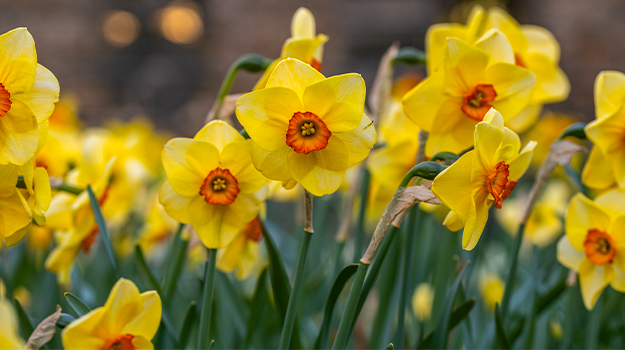
When and how to plant narcissus?
Although often called a daffodil, it is most often a narcissus, a member of a family that includes about fifty species and numerous cultivars. Miniature varieties are available in pots, as well as large cultivars that can reach 60 cm in height in the garden. Its flowers last up to three weeks and come in shades of yellow, cream or white, sometimes with an orange centre.
An excellent choice for northern climates, narcissus faithfully return year after year, showing no signs of decline. Clumps can be divided when they become too large to produce new plants.
In northern zones (3 to 5), choose a sunny or partially shaded location. Add mulch to protect the roots from the cold. In zones 6 to 9, plant narcissus in partial shade in well-drained soil. Avoid overwatering in summer (instead, keep the soil dry).
Tip: After flowering, but before temperatures allow transplanting your narcissus into the garden, keep it cool by watering only moderately.
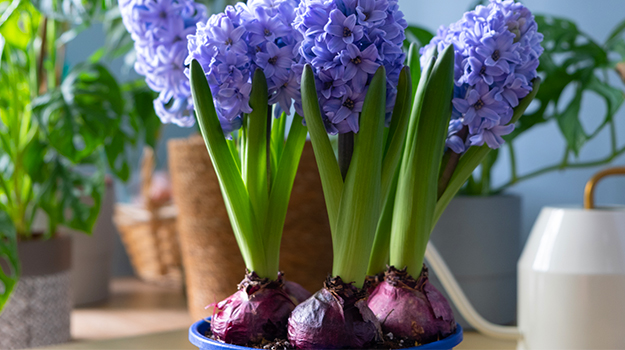
How to replant potted hyacinths?
Hyacinths are prized as much for the unique shape of their flowers as for their fragrance, which has both sweet and spicy notes. The ideal time to transplant your plant into the garden is when its foliage is just beginning to decline but is still green.
In northern zones (4 and 5), hyacinths are easy to grow provided the soil is well-drained to prevent the bulbs from rotting. In zones 7 to 10, summer heat can reduce flowering. Choose a partially shaded location and keep the soil dry during the summer.
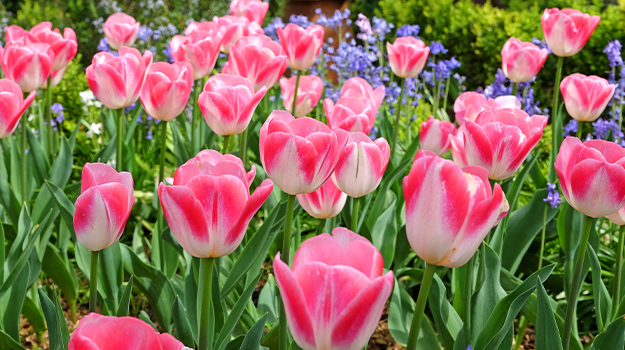
Can store-bought tulip bulbs be replanted?
Introducing potted tulips into your garden offers guaranteed results. Your bulbs will bloom for years with minimal input of balanced fertilizer, compost or bone meal. When the flowers become smaller or fewer in number, it's simply time to divide them to obtain more plants!
An excellent choice in northern regions, tulips rely on the winter cold to break their dormancy and stimulate flower development within the bulb. In zones 7 to 9, winter temperatures will not trigger flowering. The bulbs will need to be forced by placing them in a cold environment, unless you choose varieties adapted to warmer climates.
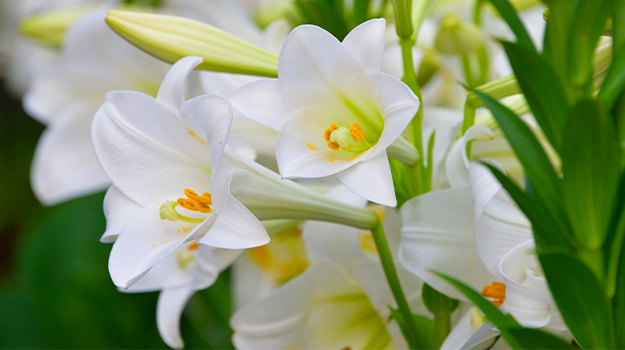
Can Easter lilies survive outdoors?
The iconic Easter flower ranks fourth among the most popular potted plants in the United States, with millions sold each spring. Once planted in the garden, however, the results are often disappointing. As the plant is not very hardy, flowering is not guaranteed.
In northern regions, choose a sheltered spot where lots of snow accumulates, and apply a thick layer of mulch to the soil before winter. Easter lilies have a better chance of survival in zones 6 and higher. In zones 7 through 9, choose a location with light afternoon shade to protect your lily from the intense heat.
Tip: The coloured lilies also sold at Easter are often hardy in zone 3 or 4, making them better choices in northern regions.
When and how to plant a hydrangea in open ground?
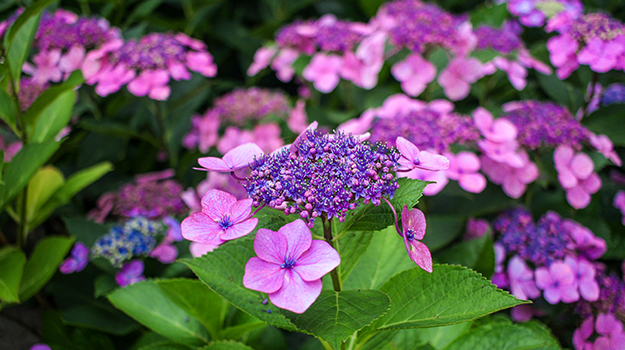
The large blue, pink or purple flowers offered at Easter under the name hydrangea are generally Hydrangea macrophylla (bigleaf hydrangeas) or Hydrangea serrata (mountain hydrangeas).
Blooming on old wood that is susceptible to frost, these hydrangeas are at the limit of their hardiness in zone 5. Hydrangea serrata can bloom in a location that receives a lot of snow and is sheltered from the wind. Hydrangea macrophylla, on the other hand, is a zone 6 plant. In northern regions, varieties that bloom on new wood, such as the Endless Summer series, are preferable.
Tip: To enjoy its beautiful blooms, you need to know when and how to prune hydrangeas according to the variety.

Other Easter plants to try in the garden
Beyond traditional Easter flowers, other varieties are gaining popularity. Some are perennials in the garden, others are grown as houseplants. Still others are worth trying in the garden since their days are numbered indoors anyway.
How to care for a Lenten rose?
Presented as the Christmas rose in our other article, the hellebore is a perennial plant also known as the Lenten rose. Prized for its early flowering and the beauty of its blooms, it comes in stunning shades ranging from soft green to deep purple, including all hues of cream, red and pink.
An excellent choice for the garden, hellebores bloom reliably every spring, provided you choose a variety that is hardy in your region. Learn everything you need to know about growing hellebores in our other article.
How to tell an indoor azalea from an outdoor one?
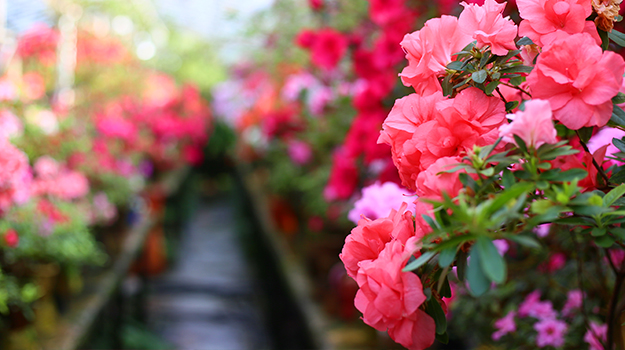
Similar to, though smaller than, garden-grown azaleas, those sold at Easter are florist azaleas. They are generally grown indoors. It is possible to acclimate them to spend the summer outdoors, but they must be brought inside before the temperature starts to drop.
For outdoor use, garden centres offer a beautiful selection of Japanese azaleas (Rhododendron japonica). These shrubs prefer a semi-shaded location and acidic soil. Applying mulch around their base is recommended. The Northern Lights series is hardy in northern climates.
Can primroses grow outdoors?
Fussy indoors, primroses need consistently moist but never waterlogged soil. Indoors, ensure their potting mix never dries out completely. In the garden, organic mulch is highly recommended.
Some primrose varieties purchased at Easter can tolerate transplanting to a partially shaded spot in rich, moist, well-drained soil. Others will not survive, regardless of your climate. Give yourself the best chance of success by choosing Primula acaulis or P. vulgaris (zones 4 to 8) over hybrids, which are often less hardy.
The best choices by hardiness zone
You’d like to transplant your Easter plant into the garden after it is done flowering? Before settling on a plant that is not suited to your region, consult the list of plants that offer the best results in terms of flowering and ease of care in your hardiness zone.
In northern zones (3, 4 and 5)
- Narcissus
- Tulips
- Hyacinths
- Hellebores (hardy varieties)
- Coloured lilies
- Hardy azaleas
- Hydrangea macrophylla (Endless Summer) or serrata
In temperate (6 and 7) or hot (8 and 9) zones
- Narcissus
- Hyacinths and tulips (varieties adapted to hot regions)
- Easter lilies
- Hellebores
- Azaleas
- Hydrangeas
Among the Easter flowers sold in pots, many are early-flowering bulbs. Planting them in the garden adds colour to the greyness of the spring landscape for years to come. By combining them with summer bulbs such as dahlias, gladioli, acidantheras, etc., you can enjoy a second wave of blooms that begins in July or August and often lasts until the first frosts.
They can also be planted in spring by mixing PRO-MIX Bone Meal BLOOMBOOST into the planting soil to ensure exceptional flowering. Reserve a prime spot for these bulbs in your garden now!
