
- What is a hellebore?
- Can you keep a perennial plant indoors during winter?
- Indoor gardening: how to care for a hellebore?
- Outdoor gardening: Where is the best place to plant Helleborus?
- Hellebore care season by season
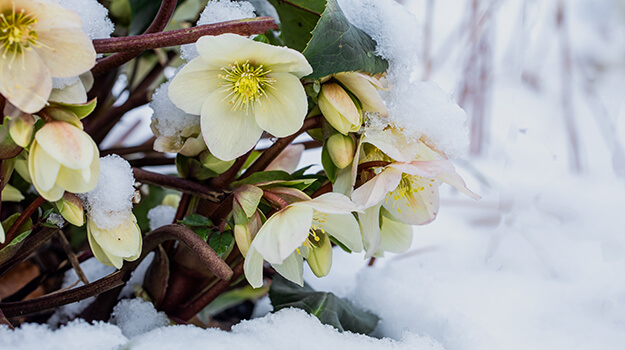
While almost the entire garden is dormant, the hellebore takes centre stage. This fascinating perennial, also known as Christmas rose or Lenten rose, offers an early and long-lasting flowering that begins in late fall in mild climates, making it a star plant during the winter.
In northern regions, this lovely perennial rarely blooms before April or May, but it sometimes manages to pierce through the snow as early as the end of March.
Some garden centres now offer hellebores in full bloom for the holiday season. Although it’s often sold as a Christmas plant, the hellebore is much more than that. With proper care, it can bloom until March, and sometimes even later. If you're only going to get one plant for the holidays, this is definitely the one to choose.
What is a hellebore?
Hellebores belong to the Ranunculaceae family, which includes several perennials with beautiful flowers and evergreen or semi-evergreen foliage.
Like buttercups, hellebores, or Helleborus, are very popular in Europe, where the climate is favourable. They are also gaining popularity in North America, and with good reason.
In addition to producing early and long-lasting blooms (it is one of the longest-flowering perennials), hellebore is easy to grow and requires virtually no care as long as it is grown in a suitable location.
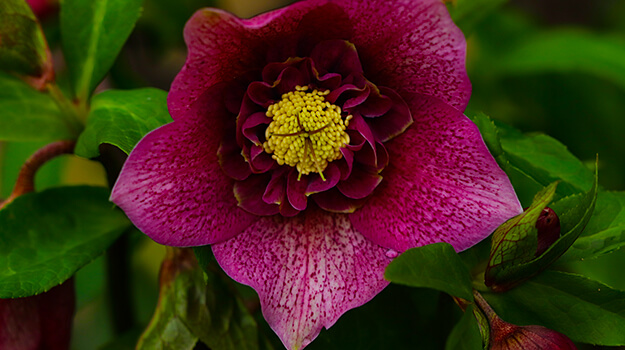
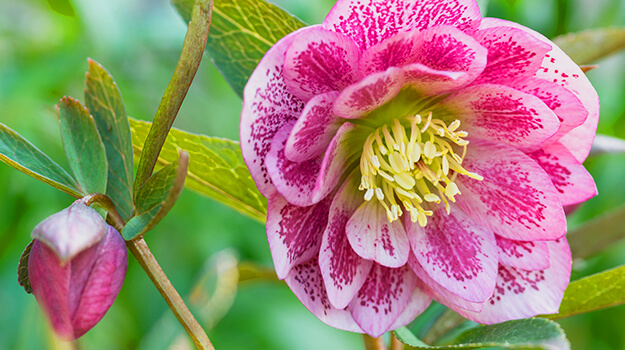
However, it’s the colours of its flowers that make the hellebore exceptional: white, green, pink, plum, almost black, sometimes speckled or edged with another shade… Each hellebore is a work of art in itself.
Hellebores bloom early, but their decorative foliage more than makes up for it during the rest of the season. It’s most often dark green, but it can also be bluish or light green. Its thickness sometimes gives it a leathery appearance and allows it to withstand winter. Some varieties are beautifully divided into several lobes and remain attractive practically year-round. They pair wonderfully with hostas, heucheras, sedges, ferns and other plants grown for their foliage.
What is the most beautiful hellebore?
- Helleborus niger: white flowers with a golden centre, very early blooming
- Helleborus orientalis and hybrids (Lenten Rose): long-lasting blooms and a wide variety of colours (pastel, plum, purple, green). This is the most versatile range for flower beds and containers.
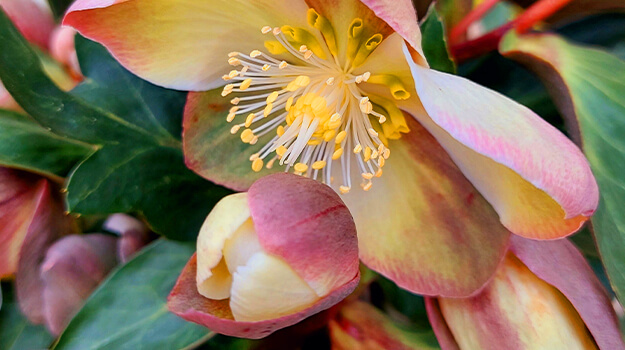
- Helleborus Amber Gem: flowers ranging from cream to soft yellow, edged with purplish-pink
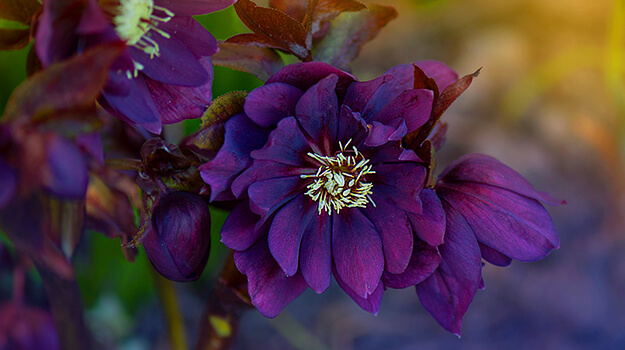
- Helleborus Black Diamond: plum, almost black flowers
- Helleborus Ivory Prince: ivory-white flowers slightly tinged with pink, on purple stems
- Helleborus Tropical Sunset: creamy-yellow flowers streaked with purple
Pro tip: In northern regions, choose hybrids that are hardy in zone 4 or 5. Some species can withstand temperatures as low as -30 °C. In the fall, cover their roots with a thick layer of mulch to help them get through the cold season.
Can you keep a perennial plant indoors during winter?
Grown in northern regions, hardy perennials usually need to go dormant during the winter, under a thick blanket of snow. Overwintering them in the warmth of an overheated house is generally not advisable. However, hellebores seem to thrive there, at least long enough to be planted in the garden the following spring.
From then on, just like your other perennials, it will reappear each spring and bloom from May to July.
Indoor gardening: how to care for a hellebore?
In nature, hellebores are woodland plants that thrive in cool, consistently moist soil. When grown indoors, it's important to keep the potting mix consistently moist, but never soggy. Be sure to empty saucers or pot covers after each watering to prevent the water from stagnating.
Despite its sophisticated appearance, the hellebore is not a very complicated plant. Indoors, it will appreciate a bright but not too hot location, and care should be taken not to let its soil dry out completely.
Outdoor gardening: Where is the best place to plant Helleborus?
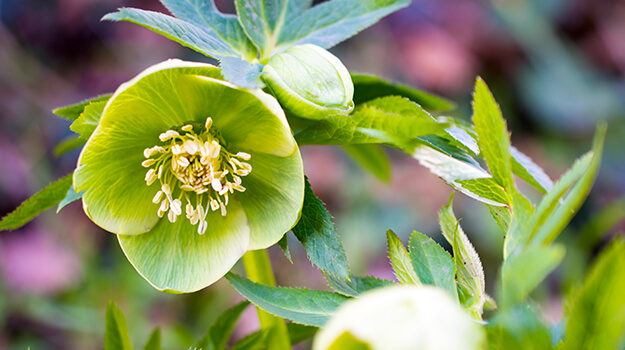
In late spring, after you’ve acclimatized it, plant your hellebore in a location that is partially shaded to shaded in summer, but sunny in spring. Planted near a wooded area or at the base of trees with light foliage, your plant will thrive. However, be careful that the soil is not too acidic, and that it is rich and well-drained.
Since hellebores like cool soil, care must be taken to water them during heatwaves.
What potting soil should I choose for my plant?
Hellebores are perfect for creating fabulous pot arrangements. Choose a well-aerated and well-draining mix like PRO-MIX Potting Mix, which will prevent water from stagnating around the roots. The mycorrhizae it contains will promote establishment and resilience.
If you are growing hellebores directly in the ground, improve heavy or poor soils by incorporating high-quality sphagnum peat moss and organic matter to optimize their structure, drainage and water holding capacity. Adding PRO-MIX Premium Garden Mix also provides your plant with nine months of organic fertilizer.
Can you grow hellebores in Canada?
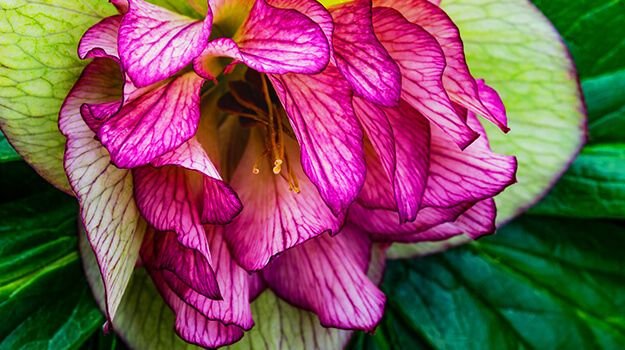
In very cold regions, hellebores need a thick layer of dead leaves in the fall because their leaves freeze. Although this doesn't kill the plant, it looks much nicer with its old leaves in the spring when it begins to flower.
How long does a Christmas rose last?
Hellebores can live for 30 years. The plant can be divided in late spring, after flowering, or in the fall, but avoid doing it too frequently as hellebores appreciate stability. When the plant is undisturbed and well established, it flowers profusely.
How do I grow hellebores from seed?
It's important to know that seedlings take time (up to 6 months to germinate, and the plant won't flower for up to 3 years) and offer unpredictable results. While it's interesting to try them, hybrids aren't always reliable. Although they can sometimes produce pleasant surprises, to preserve the plant's characteristics, it's best to buy or divide them.
Is hellebore poisonous to humans?
Although it may seem harmless, the hellebore is toxic if ingested, and its sap can be irritating. Keep it out of the reach of young children and pets. When pruning or removing faded flowers, it's best to wear gloves.
Also, clean your tools after use to limit the spread of foliar diseases.
Hellebore care season by season
What to do in the garden in spring?
Remove damaged or spotted leaves to encourage flowering and limit the spread of foliar diseases. Apply a gentle and balanced slow-release fertilizer such as our Garden Fertilizer 4-4-8.
How to care for helleborus in summer?
Maintain soil moisture, but avoid overwatering. Use organic mulch to retain soil moisture and protect the root system.
Do you cut back hellebores in autumn?
Hellebores have evergreen foliage, so they do not require pruning. In the fall, clean them up lightly without cutting back too much.
Should I mulch my hellebores in winter?
Apply a thick layer of mulch to the soil to protect the roots from frost. In case of severe frost or thaws followed by cold snaps, protect the flower buds with a light wintering cover or add more mulch. In northern regions, late in the season, the plant can be covered with shredded dead leaves.
The hellebore is an easy and fascinating perennial, perfect both indoors and outdoors. In the spring, plant it in your garden. It will bloom for months, year after year, requiring very little in return under the right conditions: a good location, good soil and water during periods of drought.
Try our premium and organic soil mixes to help your plant thrive with minimal watering, whether in a container or directly in the ground.
