
We grow flowers from seed for the same reasons we grow vegetables: to have access to rare or new varieties that are impossible to find at the garden centre, for the pleasure of watching them grow, and for the satisfaction of seeing the fruits of our labour.
With flowers, however, the main incentive for amateur gardeners remains almost always the same: to obtain a large quantity of flowers at a low price.
Have you long dreamed of a gigantic bed of annuals that bloom for months on end? With seedlings, your dream becomes a reality.
When is it advisable to sow flower seeds?
In northern regions, flower seeds are generally sown indoors from January to April, depending on the variety. Slower-growing varieties, such as begonias, impatiens and gazanias, are planted at the beginning of the year. Faster-growing varieties, such as zinnias, cleomes and marigolds, can be sown in April.
Refer to the planting calendar (depending on your region) to know when to sow your seeds so that your flowers are ready to be transplanted into the garden once all risk of frost has passed. In northern regions, this often means waiting until early June.
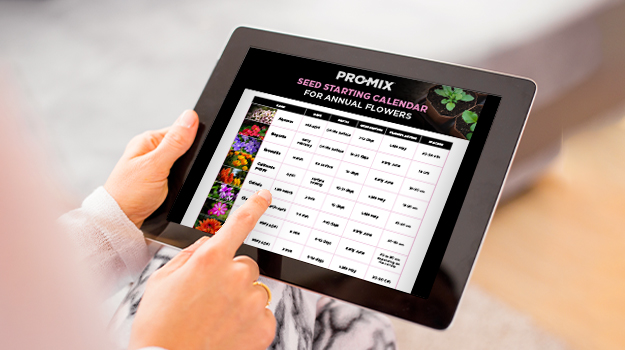
Download your printable annual flower planting calendar now. Also check out the perennial flower planting calendar to maximize your chances of success.
How to start flower seeds?
With the right products and proper care, successfully starting flower seeds is easy. It is essential to use a suitable, rich and well-aerated potting mix that is specially formulated to ensure a good germination rate, such as PRO-MIX Organic Seed Starting Mix.
It is also essential to plant the seeds in containers with drainage holes. Here’s how to successfully start your flower seeds, step by step.
Material:
- Cups, multi-cell trays or any other shallow container with drainage holes.
- PRO-MIX Organic Seed Starting Mix
- Seeds
- Watering can (fine spray nozzle) or spray bottle
- Plastic film
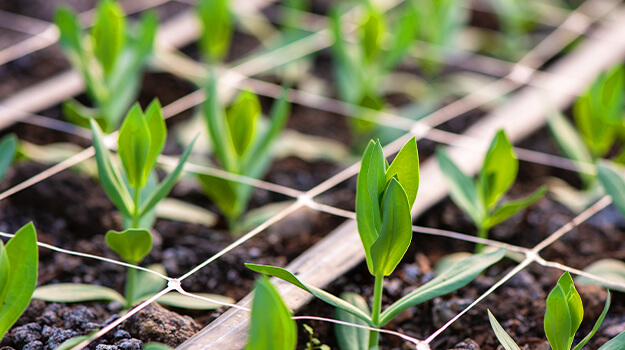
1. Fill two thirds of the cups with seed starting mix, then gently pack down the soil to create a level surface.
2. Broadcast the seeds or sow them in rows, spacing them apart.
Tip: You can mix tiny seeds with sand to distribute them better.
3. Cover the seeds with a thin layer of potting soil (unless otherwise indicated on the packaging, usually a thickness equivalent to 2 to 3 times that of the seed).
4. Water gently (with a fine spray or a spray bottle) to avoid disturbing the seeds.
5. If desired, cover the containers with plastic film (to be removed as soon as the small shoots appear) to recreate the conditions of a mini-greenhouse.
6. Place your containers in a bright spot near a window or under a grow light. You can also place them on a heat mat, which encourages seed germination. Light will be essential once the seedlings emerge.
7. Water regularly (twice a day if necessary) but not excessively. The soil should remain moist but not waterlogged.
Tip: Always follow the instructions on seed packets. They provide the best guidance (soaking, planting depth, specific care) for successful seed germination.
Why soak seeds in water before sowing?
Rehydrating seeds after dry storage accelerates germination by a few days. Soaking is often beneficial for seeds with hard shells (nasturtiums, lupines, sweet peas), large seeds (sunflowers), or seeds that have been stored for too long, are old or have dried out.
The soaking time depends on the type of seed, but generally lasts between 4 and 12 hours, or up to 24 hours for hard-shelled seeds. Never leave them in water for more than 24 hours, as they may rot. Ideally, the water should be non-chlorinated and between 20 and 25 °C.
After soaking, let them drain on a paper towel, then plant them immediately. Above all, don't let them dry out again!
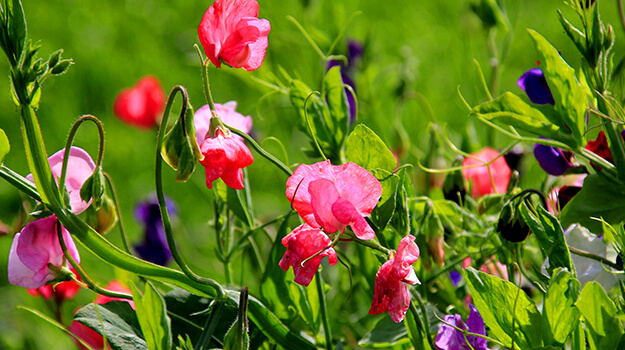
Tips: The following perennial flowers can benefit from rapid rehydration: yarrow, gaillardia, rudbeckia. However, avoid soaking the seeds of lavender, begonia, foxglove and bellflower, seeds that require cold stratification, and microscopic seeds.
Should we fertilize flower seedlings?
The answer is yes! Like all plants, seedlings benefit from fertilizer as they grow. However, it's important to do it at the right time and to use the amount recommended for very young plants. Learn how to fertilize your seedlings in our article.
Should seedlings be transplanted?
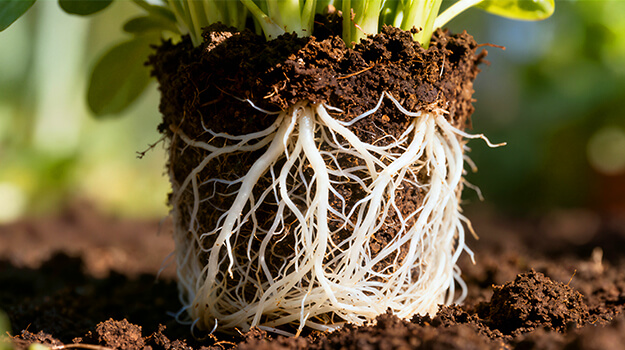
Transplanting is not absolutely necessary, but it will help your plants become strong and robust and develop a larger root system.
When to transplant flower seedlings
When the seedlings have 3 to 5 true leaves, it's time to carefully remove them from their pots (be careful of the fragile roots) and repot them in individual containers. Lightly pack down the soil around the plants, then water until water drains from the drainage holes.
Again, make sure your plants get the light they need. Avoid drafts and enclosed spaces.
Tip: Give your indoor seedlings adequate light. Using a grow light will help produce sturdier, less stunted plants!
Your plants can be planted in the garden once they are strong enough and the risk of frost has passed. Keep an eye on the weather forecast and make sure your flowers will get the conditions they need (soil type, light, drainage, shelter from the wind) where you plant them.
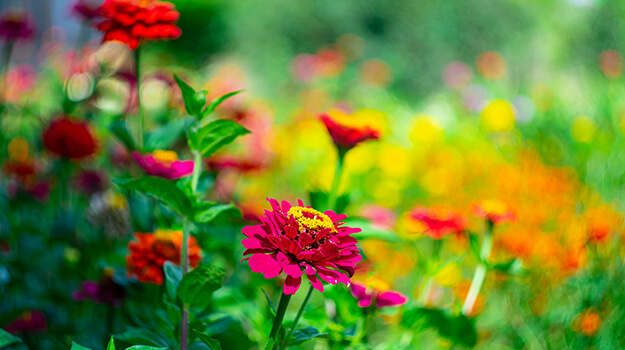
In a flower bed, enrich the existing soil by incorporating all purpose soil or garden soil that contains an organic fertilizer and a high proportion of peat humus to lighten the soil and allow the fragile roots to expand. The use of mycorrhizae will also encourage strong and rapid growth, for larger, healthier plants.
If you are growing in containers, our Premium Potting Mix or our Moisture Mix will provide your plants with optimal conditions for healthy growth and dazzling blooms.
PRO-MIX tip: As with vegetable seedlings or indoor plants, it's important to acclimate your seedlings before planting them in the garden. For delicate flowers, allow 14 days for acclimatization. They will then be able to withstand the wind and sunlight.
Which flowers are the easiest to sow?
Whether you're a beginner or a seasoned gardener, some flowers are incredibly easy to sow and quickly bring color and life to the garden.
Discover 6 flowers that are easy to sow :
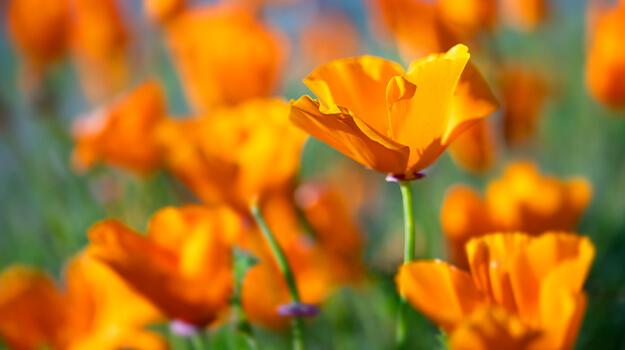
- California poppy
- Love-in-a-mist
- English daisy
- Gypsophila
- Cosmos
- Nasturtium
Seeds purchased in packets will produce flowers that are exactly as described. However, with seeds harvested from the garden, it's best to know in advance that the resulting plants and their flowers will not necessarily be identical to the mother plant. If you want to obtain an identical plant, it's best to propagate by division.
Perennial flowers can also be propagated by seed. This is also a good way to obtain varieties that are difficult to find at garden centres or expensive to buy (this is sometimes the case with varieties that have just arrived on the market). Online stores also offer a very nice selection!
Discover the fastest-growing flowers from seed. If you started your sowing late, some can even be sown directly in the ground as soon as the soil has warmed up!


