
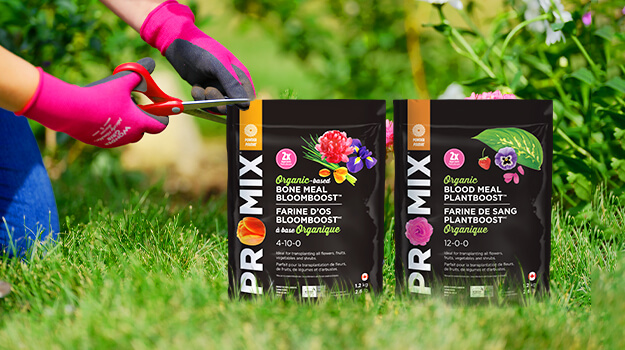
Bone meal and blood meal have traditionally been used in home gardens. Gardeners often find themselves confused between those amendments. Both come from animals, so they’re safe and organic. However, they provide different nutrient contents to the soil and the plants. They are considered good organic slow-release soil amendments and used to address two different nutrient needs. Unlike synthetic fertilizers, these organics contain many traces of other nutrients that can improve soil composition.
While blood meal is a high nitrogen booster for leafy top growth, bone meal provides phosphorus and calcium for strong root development and enhanced flowering. The key takeaway is that each of these products offers valuable benefits, provided you know how to use them. But above all, when to apply them.
When to use bone meal?
PRO-MIX Bone Meal BLOOMBOOST 4-10-0 contains significant amounts of phosphorus and calcium with a small amount of nitrogen. It slowly breaks down in the soil, releasing phosphorus and calcium over several months. This slow-release action helps promote steady root growth, better flowering and fruit production.
The high calcium level contributes to stronger cell walls and sturdy stem growth. Bone meal lasts up to 4 months and can be applied once early in the season, at planting time.
Why use bone meal?
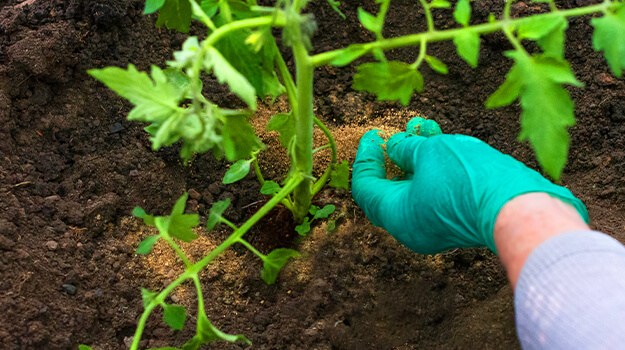
Most gardeners use bone meal as a root booster by mixing it into planting holes, not just for the vegetable garden, but for any perennials, shrubs or trees that are planted. It is traditionally used in planting holes when planting flowering bulbs, as the phosphorus is useful in promoting more blooms in vegetables and flowers. You can mix bone meal into the potting mix in your flower pots.
How to use bone meal for your plants
Here is a list of plants that benefit from the addition of bone meal, along with recommendations related to its use. For each of them, remember to keep a 3 to 5 cm space away from the stems/bulbs to avoid burning. After application, water to activate and limit odours. The scent of bone meal is attractive to pets and some wildlife. Make sure that you mix it well into the soil and store any leftovers in airtight containers.
New garden beds
Weed and loosen the soil to a depth of 15–20 cm. Incorporate the amendment into the top 5–10 cm (do not leave unmixed on the surface). Add 1/2 to 1 cup (125–250 ml) per square metre.
Vegetable gardens
Bone meal contains 8 to 12% calcium. Bone meal is extremely useful for root crops like onions, potatoes, carrots, garlic, beets, etc. Tomato plants also benefit from the calcium, which is vital for the cell wall strength of the tomato fruit, helping to prevent blossom end rot.
Mix into garden beds during spring preparation, using a general guideline of 3-5 kg (5-10 lb) per 100 square feet. Bone meal can also be used when transplanting tomatoes, peppers, squash and potatoes into the garden to promote a strong root system and prepare for fruit production.
Bulbs
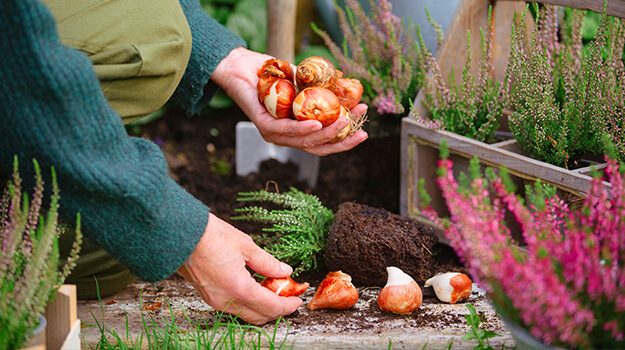
When planting bulbs in spring or fall, place a tablespoon or two directly into the planting hole, mixed into the soil (avoid direct contact with the bulb).
Annual transplants
Place a tablespoon or two directly into the planting hole. Mix in thoroughly with the soil before setting the plant.
New perennials, roses, shrubs and trees
In the planting hole, mix in 2–4 tbsp. for perennials, 4 to 6 tbsp. for roses or shrubs, and 0.4-0.9 kg (1-2 lb) for trees, depending upon size. Mix well into the soil at the bottom and sides.
Established plants
Sprinkle around the base of the plant (side-dressing), scratch it into the top 1-2 inches of soil without disrupting the roots, and water thoroughly.
Potted plants
Apply one tablespoon per pot for every 2 square feet of surface area and work into the soil. Water thoroughly after applying.
Good to know: Bone meal is not suitable for plants that thrive in acidic soils, such as azaleas. Being alkaline, bone meal can raise the soil pH, making it less suitable for plants that prefer acidic conditions.
When to use blood meal
Apply blood meal in early spring when plants begin growing actively. Reapply every 6-8 weeks during the growing season as needed, or when you notice signs of nitrogen deficiency, like yellow or pale leaves. The nitrogen in the blood meal is released over 6 to 8 weeks.
Avoid application of blood meal just before and during flowering if you want flowers and fruit, not just foliage. Do not use it in late summer or fall to avoid encouraging the growth of new shoots vulnerable to frost.
Why use blood meal in the garden
Traditionally used as a nitrogen side-dressing during the season once the plants are established, most gardeners use blood meal to promote lush, green foliage. It is a quick booster to correct yellowing plants suffering from nitrogen deficiency.
It is often used as an animal deterrent, as the smell (of potential hunters) repels plant-nibbling pests like rabbits and squirrels.
Tip: Blood meal is known as both an attractant to carnivores (pets, racoons) and a deterrent to herbivores (rabbits, squirrels). To avoid carnivore interest, work the blood meal into the soil and water it in. To deter herbivores, you need to leave the blood meal on the soil surface and replenish after rain.
How to use blood meal
Vegetable gardens
Mix into garden beds during spring preparation, using a general guideline of 0.9-1.4 kg (2-3 lb) per 100 square feet.
Newly emerged seedlings and annual transplants
Usually applied after roots have developed and after the plant is somewhat established. Apply about 1/2 tablespoon per seedling around the drip line, away from the stem.
Established plants
Apply blood meal at a rate of 1–2 teaspoons per plant or 1–4 tablespoons for larger shrubs/plants, as a side-dressing. Apply every 6–8 weeks during the growing season. For larger areas, use 0.9-1.4 kg (2-3 lb) per 100 square feet. Always mix into the top inch of soil and water thoroughly to activate.
Potted plants
Apply one tablespoon per pot for every 2 square feet of surface area and work into the soil. Water thoroughly after applying. If mixing in with potting soil before planting, you can add 1-2 tablespoons for a 5-6” pot, 3-5 tablespoons for a larger 10-15” pot.
Important: To avoid burning roots or stems, keep a 3 to 5 cm space away from the plant or bulbs. After each application, water to activate blood meal and limit odours.
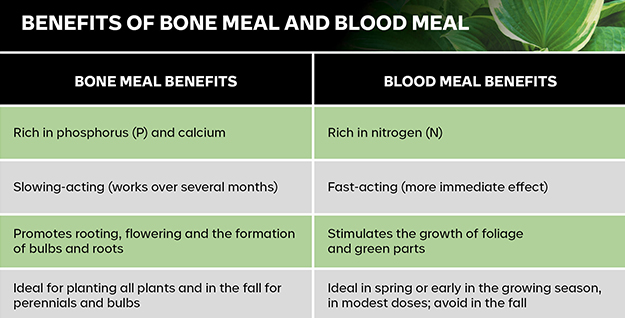
The benefits of bone meal and blood meal
Here is a summary table of the benefits of bone meal and blood meal for your plants.
Can you mix blood meal and bone meal?
You can combine blood meal and bone meal together to create a more balanced organic fertilizer. Many gardeners mix the two at a rate of 50/50, giving a more moderate nitrogen and phosphorus ratio. You end up with an 8-7-0 organic fertilizer.
This combination approach is effective for vegetable gardens with different mixed plantings that have different nutrient demands throughout the season.
The nitrogen from blood meal becomes immediately available to support early spring growth and leafy development, while the phosphorus and calcium from bone meal support flowering, fruiting and root system development through mid and late season. Blood meal alone can be used as a side-dressing during the season on heavy feeders like corn, tomatoes and vine plants.
Typical fertilization program with bone meal and blood meal (in zone 5)
- Early spring: small dose of blood meal to stimulate foliage growth; bone meal at planting time.
- June: light nitrogen adjustment if plants are turning pale.
- Late summer–fall: bone meal for roots and bulbs; avoid blood meal.
Here are some examples of use in combination:
Tomatoes
At planting time, incorporate 2 to 3 tablespoons of bone meal into the planting hole; work 1 tablespoon of blood meal into the topsoil 2 weeks after the plants have established themselves. If the leaves are pale, stop applying blood meal as soon as flowering begins.
Bulbs
In the fall (for spring bulbs) or at planting time in spring (for summer bulbs), mix 1 to 2 tablespoons of bone meal into the soil; avoid using blood meal except in very small doses if the plants are not establishing themselves.
Roses
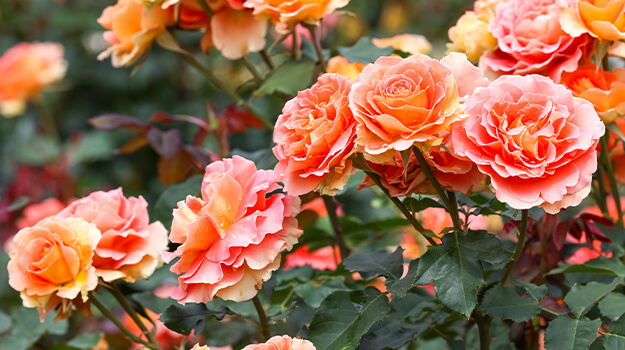
At planting time, incorporate 4 to 6 tablespoons of bone meal into the planting hole; in spring, work 1 to 2 tablespoons of blood meal around the base of the plant (lightly scratching the surface) if the foliage is weak.
Not a “one size fits all” solution
You need to know that plants need nitrogen for top growth, phosphorus for root growth and potassium for nutrient absorption and stress tolerance. You’ll see this as the three numbers on the bag.
The phosphorus in bone meal (middle number on label) is traditionally needed at planting time to promote stronger root development. But plants still require nitrogen (first number) and potash (third number) from other sources.
If you are adhering to an all-organic garden, then you would use, for example, blood meal 12-0-0 for nitrogen, bone meal 4-10-0 for phosphorus and kelp/seaweed meal 1-0-4 for potassium. This way, you provide all the necessary organic major nutrients needed for healthy and strong plants. An all-organic fertilizer program not only provides these primary nutrients, but it also supplies a wide range of secondary and micronutrients, such as calcium, sulphur, iron, etc.
Bonus: These organic sources encourage the life of beneficial soil microorganisms, which can make these nutrients available to the plant roots and, as well, improve the soil structure. You don’t get that from synthetic and mineral fertilizers.
Knowing when to use Bone Meal BLOOMBOOST 4-10-0 and Blood Meal PLANTBOOST 12-0-0 is key to success. Applied at the beginning or end of the season, or even at planting time, the slow-release bone meal nourishes the roots and supports future flowering. A small dose of blood meal in the spring encourages foliage growth.
If poorly timed, these amendments unbalance the plant, whereas the right timing maximizes plant health, flowering and harvests, while reducing waste as well as wildlife and environmental problems.
Whether you're planting bulbs in the fall, transplanting tomatoes in the spring or nurturing an established garden bed, the right product at the right time makes all the difference, and PRO-MIX is there to help you get it right, naturally.
