
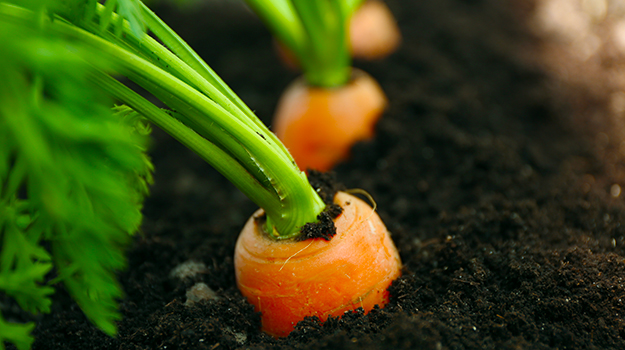
Carrots are among the vegetables whose ease of cultivation is often debated. Rest assured, carrots are easy to grow and require minimal care. With the right advice, your harvest will last from early spring until the first frosts!
What's the trick to growing carrots?
While carrots can tolerate some shade, they will be crisper and more flavourful if grown in full sun. They will also grow faster under optimal conditions!
Sow them directly in the vegetable garden as soon as the soil can be worked in the spring. Because they are hardy, carrots can be planted 2 to 3 weeks before the last expected frost, or as soon as the soil temperature reaches 10 °C. Starting seeds indoors is not recommended, as the carrot's initial root does not survive transplanting into the garden. If you disturb the plant, it won't produce a taproot, which is the part we eat.
Remove all rocks and clumps of soil to prevent misshapen carrots. Unfortunately, carrots become misshapen and twist as soon as they encounter an obstacle. For this reason, raised beds are a good option since their soil is generally looser and more aerated. Unless you're growing round carrots, make sure the container you choose is at least 45 cm deep. You can also opt for a raised garden bed if your soil is very dense.
Carrots need well-prepared soil with good drainage. Add a few inches of compost or well-rotted manure, along with a light amount of vegetable fertilizer, such as PRO-MIX Organic Garden Fertilizer for Tomatoes, Vegetables & Fruits 4-4-8, before planting. Incorporate everything to a depth of 8 to 10 inches (20–25 cm).
What is the proper way to plant carrots?
Ready to sow? The day before, water the soil thoroughly so that it is moist but not waterlogged when you sow. The seeds are tiny. Sow them densely, about 1.5 cm apart, as carrot seeds don't have a very high germination rate. You can thin them out later if needed.
Cover them with about 5 mm of potting soil, then water gently with lukewarm water.
The soil should remain slightly moist throughout the germination period. The fragile seedlings will struggle to establish themselves in dry, hardened soil. So, to give them a chance, water lightly every day in warm weather.
By sowing carrots until the end of July, you can harvest them right up until the end of the season!
Should I thin out my carrot seedlings?
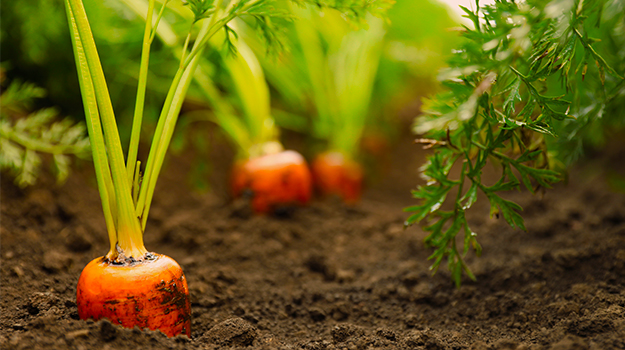
Once the seeds have germinated and your seedlings have reached a height of 3 to 5 cm, thin them out so that you have one plant every 5 cm for small carrots, or 10 cm for larger ones.
To avoid competition for water and nutrients, regularly remove weeds, taking care not to disturb the seedlings. Adding a thin layer of mulch will make this easier by preventing weeds from establishing themselves too easily and will allow the soil to retain moisture and stay cool for longer.
As your plants grow, add mulch until you reach a thickness of 7.5 cm. This will keep the carrot crowns in the shade. As carrots grow, the part above ground turns green due to sun exposure. This discolouration is responsible for their bitterness.
Which fertilizer is best for carrots?
Carrots prefer fairly rich soil. Apply a basic organic fertilizer such as PRO-MIX Organic-Based Garden Fertilizer for Tomatoes, Vegetables & Fruits 3-6-12. Avoid fertilizers high in nitrogen and very fresh manure, as excess nitrogen will produce beautiful foliage but very forked roots. Chances are you will be disappointed when you pull your carrots out.
What is the secret to growing good carrots?
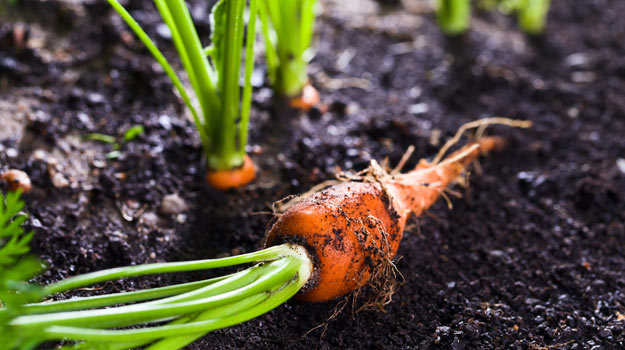
- Carrots planted too close together may become misshapen and twisted.
- Do not pull on young plants, as this can loosen the soil around neighbouring plants.
- When watering, thoroughly and deeply moisten the soil, then allow it to dry slightly before watering again. Never let the soil become too dry. Avoid surface watering, as this will produce shorter carrots.
- Weed out small weeds by lightly scratching the surface of the soil. Don't wait until they grow too large, as they will compete with the carrots for water and nutrients. When this happens, the weeds always have the upper hand.
- Apply fertilizer along the rows about two weeks after planting and repeat when the plants are 8 to 10 inches (20-25 cm) tall. You can use the same fertilizer as at planting time.
- Cover the crowns of the carrots with topsoil or mulch if they are visible. Sun exposure will cause the tops of the carrots to turn green, which will make them bitter. Dwarf varieties such as ‘Nantes Half Long’ or ‘Little Finger’ are ideal for containers, or you can grow standard sizes in a deeper pot.
What are the most common pests and diseases for carrots?
Carrots are generally disease-resistant, but when a disease develops, it can be extremely difficult to control. Prevent disease by keeping the growing area clean and free of plant debris. Water carefully, avoiding overwatering.
Plant your carrots in a new location each year. Carrots can be affected by carrot fly and carrot weevil. Since these insects overwinter in the soil where their hosts were planted, crop rotation is a good practice. If carrot fly attacks your crop two years in a row, wait a year before replanting. Mini-tunnels also help keep several pests at bay.
The Fly Away and Resistafly varieties are resistant to carrot fly attacks.
Our tip: For effective crop rotation, avoid planting carrots where parsnips, parsley or celery were grown the previous year, as these vegetables are susceptible to the same insects.
How do I know when it's time to pull up my carrots?
The fantastic thing about carrots is that you can harvest them at all stages of development, from baby carrots in early summer to fully mature carrots in the fall. Keep in mind, however, that carrots that have experienced a light frost in late fall have a sweeter taste and keep longer.
Think it's harvest time? The best way to find out without having to pull a carrot out is to remove some of the soil or mulch covering it so you can touch or see the crown.
If it has reached the desired size, it's time to harvest. If the soil is too hard to pull the carrot out, gently loosen it with a garden fork or a hand cultivator.
Can carrots be grown in containers?
Dwarf varieties, such as Little Fingers, are ideal for growing in containers. Standard-sized carrots can also be grown in containers at least 40 cm deep.


