Sandy soil: how to make the most of it
At first glance, sandy soil can intimidate many gardeners. Although it drains well, it often has a reputation for being nutrient-poor and infertile. But when you think about it, every type of soil has its own strengths and challenges, regardless of its basic characteristics.
Here’s how to make the most of sandy soil!
What are the characteristics of sandy soil?
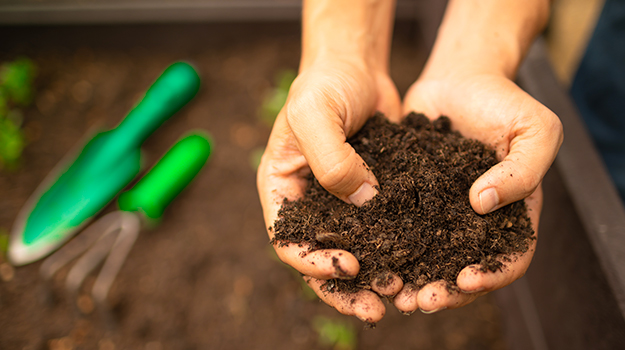
As the name suggests, sandy soil is made up mostly of sand. Compared to other soil types, its particles are much larger. Simply grab a handful and you’ll notice its light, crumbly texture slipping easily through your fingers.
While these traits may seem like disadvantages, sandy soil also offers qualities that many plants appreciate. It warms up quickly in spring and drains water rapidly, making it ideal for plants that dislike sitting in wet soil after snowmelt or rainy periods.
Of course, the downside is that sandy soil retains less moisture and fewer nutrients. More frequent watering can help compensate for this, along with regular fertilizing for heavy feeders.

Is sandy soil rich soil?
More often than not, the answer is no. However, sandy soil doesn’t mean your garden has to look dull or lifeless.
The key is to amend the soil when planting, then enrich it once a year. Choose resilient plants to create a lush, colourful garden, and water more often if needed.
Fortunately for busy gardeners, many plants that thrive in sandy soil are also highly drought-tolerant and actually prefer poorer soils.
What are the benefits of sandy soil?
- Excellent drainage capacity
- Warms up quickly in spring, allowing for an earlier growing season
- Easy to work with: simple to dig, loosen and plant
- Lower risk of fungal diseases due to reduced water stagnation
- Ideal for many bulbs, root vegetables, Mediterranean plants and perennials or trees that dislike poorly drained soil
- Minimal risk of soil compaction
- Promotes good aeration and healthy root development
Should I improve sandy soil?
For many varieties of flowers, trees, shrubs and vegetables, enriching the soil before planting is highly recommended.
Sandy soil is not an obstacle, it’s an opportunity to garden differently! By improving it with the right products, you can turn your garden into a productive and thriving space, even in sandy conditions.
How can I improve sandy soil?
Here are a few ways to improve texture, increase water retention and enrich sandy soil:
- Add compost or composted manure to supply easily available organic matter.
- Mix sphagnum peat moss or coir into the existing soil to improve moisture retention.
- Provide essential nutrients and improve soil structure by incorporating a quality enriched soil mix. Our recommendations: PRO-MIX sphagnum peat moss or our peat- and coir-based mixes, including our All Purpose Mix or Organic Vegetable & Herb Mix.
- Apply mulch to reduce water evaporation, cool the soil and gradually enrich it as the mulch decomposes.
- Fertilize regularly with a slow-release fertilizer such as our organic-based garden fertilizers 7-3-3 or 4-4-8.
When is the best time to amend sandy soil, and why?
The best time to amend sandy soil is in spring, before planting or sowing.
Why? Because sandy soil warms up quickly in spring, which means microbial activity resumes earlier. This activity is essential for breaking down organic matter and making nutrients available to plants.
Amending the soil just before planting also improves soil structure and provides essential nutrients to young plants, helping them get off to a stronger start.
Fall is another excellent time, especially for incorporating organic amendments such as compost or manure. It’s also a good opportunity to apply mulch to help protect roots from winter cold.
The compost and manure added in the fall will break down over winter and prepare the soil for the following spring. In addition to enriching and improving soil structure, they increase water retention, helping plants better withstand summer drought conditions.
Tip: If your soil contains a very high percentage of sand and is extremely poor or fast-draining, it’s best to amend it both in fall (with compost or manure) and in spring (with a quality soil mix and fertilizer).
The organic matter added in the fall will be available by spring, while early-season amendments can help meet the specific needs of new plantings.
Does improved sandy soil become sandy again?
Yes. Unfortunately, enriched sandy soil tends to revert back to its original condition over time if amendments are no longer added. Sandy soil promotes rapid decomposition and is highly susceptible to nutrient leaching.
Because it drains so easily, sandy soil struggles to retain organic matter and nutrients. Rainfall and watering can wash them deep into the soil profile.
Without regular amendments, sandy soil eventually returns to its original light, dry and nutrient-poor condition. That’s why it’s recommended to add compost or organic amendments annually, incorporate a peat-based soil mix regularly, and apply mulch.
Annual or biannual maintenance will help keep the soil fertile and well structured.
What is the best fertilizer for sandy soil?
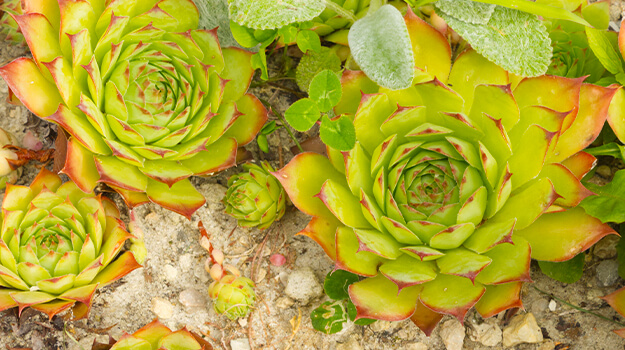
When gardening in sandy soil, it’s essential to choose a fertilizer that releases nutrients gradually while meeting your plants’ needs. Slow-release fertilizers provide nutrients over a longer period and resist leaching more effectively.
Ideally, choose a complete organic fertilizer containing nitrogen (N), phosphorus (P), potassium (K) and essential micronutrients. Combine this with regular compost applications for long-lasting results and a healthy garden.
Our recommendations:
- Organic Multi-Purpose Garden Fertilizer 7-3-3
- Organic Garden Fertilizer for Tomatoes, Vegetables & Fruits 4-4-8
Tip: Instead of fertilizing all at once, divide applications throughout the growing season to compensate for rapid drainage. Work the fertilizer into the top few inches of soil near the roots, then add organic mulch to help reduce evaporation.
What can you plant in sandy soil?
Sandy soil is perfect for most spring- and summer-flowering bulbs. Since it’s so easy to plant in, use it to create colourful, low-maintenance flower beds.
Sandy soils also make it possible to grow productive and diverse vegetable gardens. Because they are easy to loosen, they’re ideal for root vegetables, which can grow freely without obstacles. This results in beautiful, long, straight carrots. Sandy soil is also ideal for edible plants that dislike excess moisture.
Adding organic matter at the beginning of the season and applying slow-release fertilizer regularly will help ensure an abundant harvest.
When it comes to ornamental plants, annuals, perennials, trees and shrubs, the easiest to grow are those that tolerate drought and enjoy poor, well-drained soils. There are more of them than you might think.
These include lavender, irises, dianthus, sedums, gaillardia, rudbeckias, pine, birch, juniper and sea buckthorn.
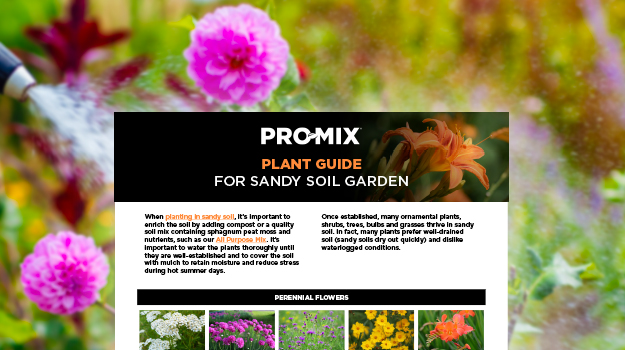
Discover the complete list in our practical guide to plants for sandy soil.
Even resilient plants will benefit from compost or organic matter added at planting time to encourage rooting, as well as mulch around the base to help conserve moisture.
Pro tip: Add compost or our All Purpose Mix to the bottom of the planting hole to enrich the root zone. Water frequently during the first year while the plant establishes itself, and don’t forget to protect the soil and roots with mulch.
When should you plant in sandy soil?
In spring, sandy soil warms up faster than other soil types, making earlier planting possible. However, for cold-sensitive plants, wait until the risk of frost has passed.
Ideally, plant once the soil is no longer waterlogged but before it becomes too dry.
Fall planting also has advantages, as the soil retains warmth that helps trees, shrubs and perennials establish roots before winter.
How to plant in sandy soil
Here are 5 recommended steps for excellent results when planting in sandy soil:
- Amend the soil by mixing compost, sphagnum peat moss, or PRO-MIX soil into the existing soil to help retain water and enrich the soil.
- Dig a hole deep enough to keep roots cool and well anchored. (Avoid raised plantings in sandy soil whenever possible!)
- Water thoroughly after planting, then monitor soil moisture closely over the following days and ideally throughout the first growing season.
- Add organic mulch around plants to reduce evaporation and keep the soil cooler.
- Fertilize regularly with a slow-release fertilizer.
Easy test to determine whether your soil is sandy
Sandy soils are often found near rivers, lakes, beaches and coastal regions.
In many cases, the amount of sand in the soil is obvious, but not always. If you’re unsure, rub some soil between your fingers. Sandy soil will feel gritty, never sticky or slimy.
Still not sure? You can also try the quick test suggested at the end of our other article.