
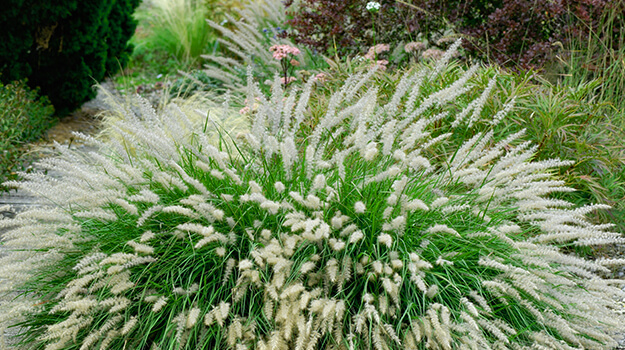
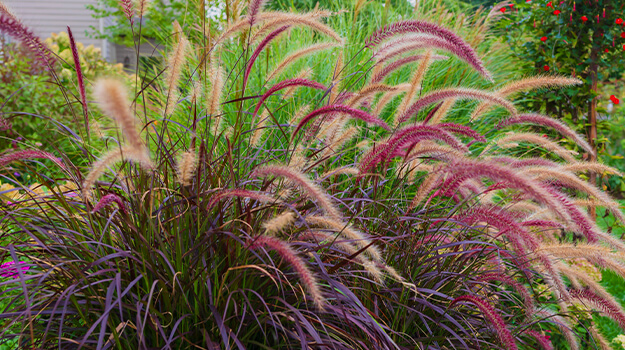
Pennisetum is also known as fountain grass, a name inspired by its beautiful flower spikes, which are generally feathery and arching, in shades of green, purple or bronze. Its versatility makes it a popular choice for all types of gardens, where it adds texture and movement both when planted in the ground and when grown in containers on a balcony or patio.
Is pennisetum a perennial plant?
Pennisetum can be perennial or annual, or grown as an annual in regions where it is not hardy. These grasses thrive in warm climates and long summers, which allow them to bloom abundantly and even self-seed.
Other pennisetum varieties are cold-hardy, particularly in regions with mild winters, and return each spring.
The most popular is undoubtedly the annual Rubrum cultivar, which can be found at virtually every garden centre. Its rapid growth is appreciated, as it quickly becomes one of the stars of the garden. It can be used in container arrangements or flower beds.
Annual species, often sold already in bloom, offer rapid growth and provide instant appeal. Perennial varieties also offer a long-lasting display of flowers, beginning in late summer and continuing until the first frosts.
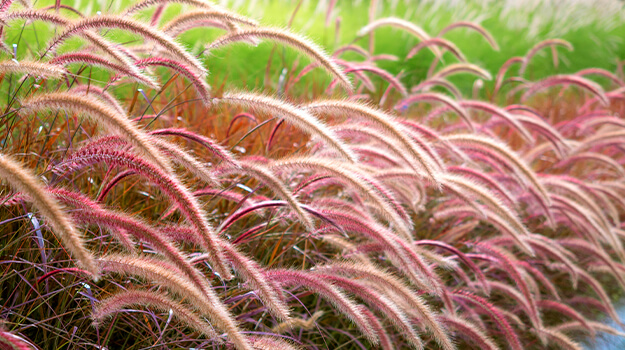
Some of the most popular annual pennisetum varieties:
- Pennisetum setaceum Rubrum (purple fountain grass), with burgundy-red foliage
- Pennisetum glaucum Purple Baron, with foliage that can appear almost black at times
- Pennisetum glaucum Purple Majesty, with purplish foliage
- Pennisetum advena Fireworks, with foliage variegated in pink, red and green
- Pennisetum setaceum Skyrocket, with green foliage
Some perennial pennisetum varieties that can be grown in colder regions (but may require winter protection):
- Pennisetum alopecuroides (Chinese fountain grass)
- Pennisetum orientale (oriental fountain grass), particularly the Karley Rose cultivar (hardiness zones 6–9, or zone 5 with protection)
You can bring your non-hardy pennisetum indoors for the winter!
What plants can be paired with pennisetum?
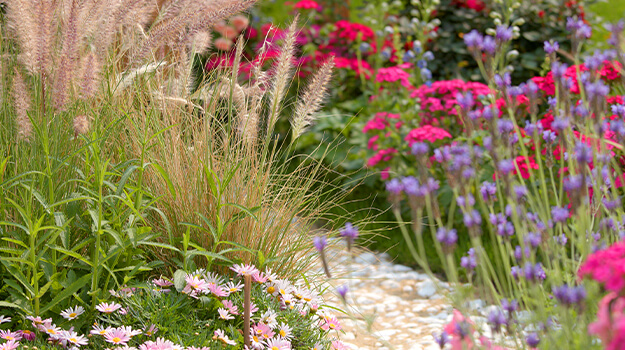
While large pennisetum varieties make a statement when planted on their own, smaller varieties can be used in countless ways throughout the garden: in a flower bed or along a walkway, in romantic gardens alongside roses, or in dry gardens paired with drought-tolerant xerophytic plants.
Pennisetum is a beautiful addition to garden beds, where it can be combined with other ornamental grasses, shrubs or perennials with pastel or brightly coloured blooms. Varieties with burgundy foliage and inflorescences make elegant combinations with white flowers and silvery foliage, whether grown in containers on patios or at entrances, or planted in the ground in borders and rock gardens.
Annual varieties can even be paired with spring-flowering bulbs or early-flowering shrubs and perennials for an instant effect. Finally, its flower spikes can be added to bouquets of fresh or dried flowers.
Discover more ways to use pennisetum and beautiful plant combinations in our other article.
Where to plant pennisetum?
Pennisetum should be planted in the spring, after the last frost. It thrives in full sun, although some varieties can tolerate partial shade, where they may produce fewer flowers.
What type of soil is best for pennisetum?
Although it can adapt to most soils, including dry or alkaline soils, Pennisetum prefers well-drained, moist soil rich in organic matter. When planting in the ground, amend the soil by adding a high-quality, well-draining planting mix, such as our Premium Garden Mix.
Dig a hole slightly larger than the root ball, add compost and water thoroughly. Avoid areas where the soil remains constantly waterlogged, as this can cause the plant’s roots to rot. If necessary, add a little perlite or sand to the planting hole to improve drainage.
For pennisetum grown in containers, using a rich, well-draining potting mix, such as our Premium Potting Mix or our Organic Moisture Mix, will help keep the soil cool and moist while reducing the need for watering.
How to water pennisetum?
Pennisetum is relatively drought-tolerant, but since it prefers moist soil, it is best to water it during hot weather. Young plants also require regular watering during the growing season, especially when grown in containers.
However, avoid overwatering the plant. It is best to let the soil dry out slightly between waterings.
What fertilizer is best for pennisetum?
Pennisetum grown in the ground can be fertilized by incorporating compost or a controlled-release fertilizer into the soil each year in the spring for perennial species, or at planting time for annual varieties.
For pennisetum grown in containers, regular fertilization promotes vigorous growth and abundant flowering. Use a liquid fertilizer such as our ROOT BOOSTER 5-15-5 or our Organic Multi-Purpose Garden Fertilizer 7-3-3.
When to prune pennisetum?
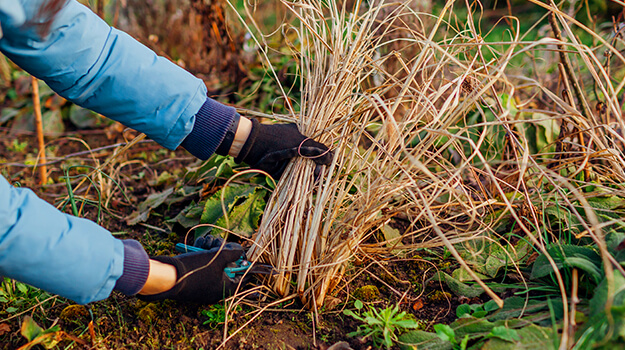
Pennisetum should be pruned in late winter or early spring, once the risk of severe frost has passed. Simply cut the dry, dead stems back to 10 to 20 cm above the ground to encourage new growth.
Even in regions with warm climates, pennisetum should be cut back once a year to encourage vigorous growth.
How to divide pennisetum?
Pennisetum is easy to propagate by division. This can be done in the spring, once the soil has warmed up and before new growth begins, or in the fall, after flowering.
Dig up the entire plant and divide the clump into several sections using a sharp spade, knife or hatchet, taking care to retain the young shoots around the outside of the clump. Replant the new plants immediately in soil enriched with a quality mix and water thoroughly. Keeping the soil moist in the weeks that follow will help the young plants establish strong roots.
Can pennisetum survive frost?
Most pennisetums are sensitive to both drought and frost. Applying a good layer of mulch around the base of the plant will help protect it from temperature fluctuations. In the event of frost, protect your container-grown pennisetum by bringing it indoors or moving it to a sheltered location away from the cold.
In colder regions, winter protection may be necessary for plants grown in areas where they are not hardy, although most pennisetum varieties are generally grown as annuals.
Can I bring my Pennisetum setaceum Rubrum indoors?
If your pennisetum is grown in a container, instead of adding it to the compost at the end of the season, bring it indoors after treating it with insecticidal soap and acclimatizing it, just as you would with tropical plants that spend the summer outdoors.
To bring a pennisetum plant grown in the ground indoors, cut back its foliage and flower stems to about 5 cm above the ground. This will make it easier for the plant to acclimatize to indoor conditions. Dig up your pennisetum and pot it up. Be sure to treat it with insecticidal soap or black soap, and take the time to acclimatize it if the outdoor temperature differs significantly from the indoor temperature.

