
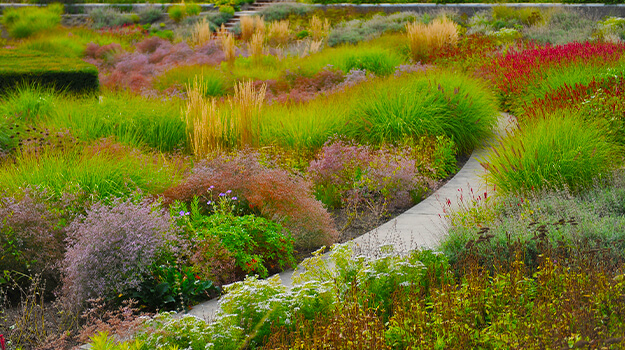
- How to choose the right plant for your garden
- Major grass families (how to use and combine them)
- Miscanthus
- Calamagrostis
- Hakonechloa
- Panicum
- Pennisetum
- Carex
- Stipa
- Fescue
With their amazing resistance to extreme weather conditions, insects and diseases, and considering the fact that they require minimal maintenance, it’s easy to understand why they are so popular.
Since it is not always easy to choose from so many varieties, we have prepared a guide for you.
How to choose the right plant for your garden
Beyond the desired effect, here are the elements to consider when choosing a grass (or any other plant) for your garden:
- choose varieties suited to your hardiness zone
- consider the exposure of the chosen location (sun, partial shade, shade)
- consider the type of soil (rich or poor, moist or dry, calcareous or acidic)
- choose a grass whose mature size matches the available space (this will save you from having to divide it every 3 or 4 years)
- consider the plant's different characteristics (textures, colours, height, flowering period, fall colouration, etc.)
- promote biodiversity by growing native grasses
What are the different families of grasses?
Here's how to differentiate some of the major grass families.
Landscaping with miscanthus (Chinese silver grass)
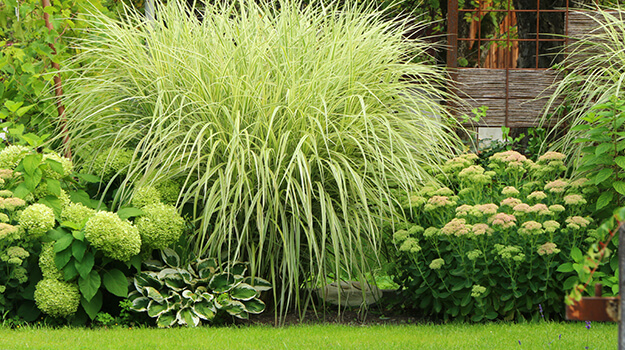
Robust and often imposing, miscanthus (or Chinese silver grass) is known for its high tolerance to harsh climatic conditions, including heat, cold, drought and drying winds. While some varieties can reach 3 metres in height, smaller ones can also be found. They come in a beautiful range of shades, both in their foliage and their inflorescences. Finally, most exhibit a spectacular fall colouration.
Miscanthus appreciates sunny conditions and prefers soils that aren’t too dry.
What to plant around miscanthus?
Its imposing size makes it a perfect companion for conifers and shrubs. With its slender shape and feathery inflorescences, miscanthus can be used to create stunning hedges or flower beds. Perfect for large plots of land, it's as popular in modern, minimalist landscapes as it is in English gardens. It can also be used alone or as a backdrop in a flower bed.
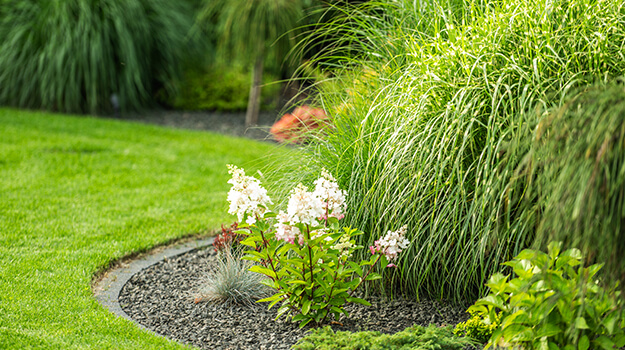
What looks good with miscanthus?
Miscanthus blends well with summer and fall-blooming perennials, lower-growing grasses, and foliage plants and shrubs. Some suggestions: asters, solidagos, rudbeckias, gauras, masterworts, euphorbias and sedums, sedges, blue fescues and hakonechloas.
Learn how to grow and when to prune miscanthus in our other article.
Landscaping with calamagrostis

A plant native to cold climates, calamagrostis is ideal for small gardens. Its foliage is low-growing, topped with upright stems that bear wheat-like flowers from mid-summer. Perfect for creating a border, it’s an easy grass that helps organize and structure the garden.
Calamagrostis are little demanding when it comes to soil and water. They are an excellent choice for a low-maintenance garden.
How to use calamagrostis in the garden?
With its elegant foliage, upright stems and feathery inflorescences, calamagrostis adds subtle movement to the garden. As it is used to structure space, add verticality or create a natural ambiance, it is often used in large numbers to create borders, beds and openwork hedges, or planted individually to create focal points.
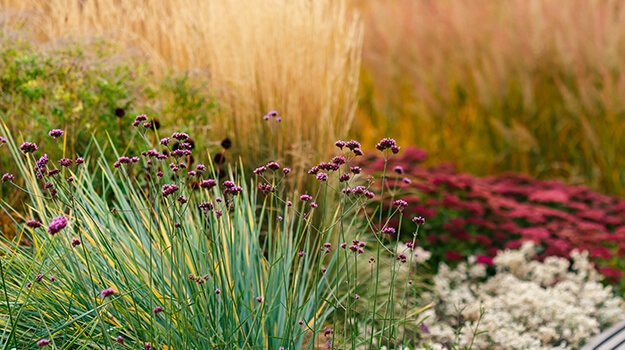
What plant goes with calamagrostis?
Calamagrostis can be combined with many fall-colouration shrubs, small and medium-sized conifers, or even brightly coloured perennial or annual flowers, such as asters, rudbeckias, perovskias, sages, lavender, crocosmias, Mexican sunflowers, heucheras, hostas, cosmos, verbenas, zinnias and dahlias.
Learn how to grow and when to prune calamagrostis in our other article.
Landscaping with hakonechloa (Japanese forest grass)
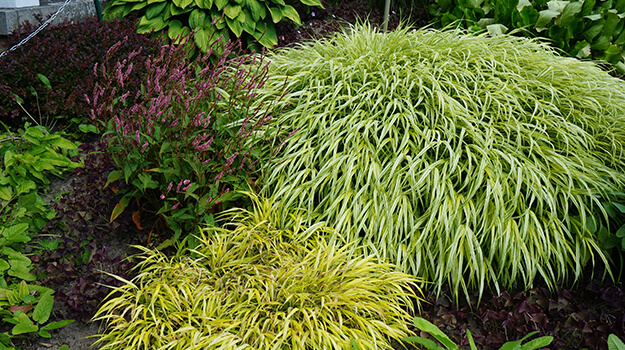
It's hard to resist its incredible colour all season long! This low-growing grass forms a pretty bunch thanks to its arching, flexible stems that fall like a fountain.
Hakonechloa stands out from other grass families due to its height and shape, and the conditions it requires. It prefers moist soil and shaded or semi-shaded exposure. It can tolerate a sunny location provided the soil is moist and cool.
How to use hakonechloa in the garden?
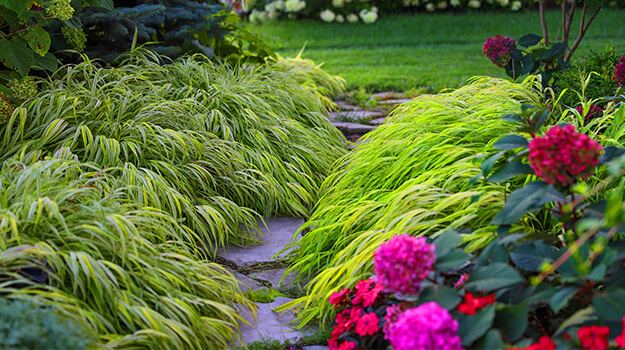
Hakonechloa is one of the few grasses that prefers shade or partial shade. This is a good thing, as it is unrivalled for adding a touch of colour and light to the landscape. Since it prefers cool, moist soil, it can be used along the edges of a body of water.
With its medium size and trailing habit, it is easy to integrate hakonechloa into the foreground of a bed or rockery. It can also create superb borders, hide a foundation and compose beautiful potted arrangements for shady areas. Finally, its exotic appearance makes it an incomparable addition to zen gardens inspired by the land of the rising sun!
What pairs well with Hakonechloa?
Hakonechloa goes particularly well with various plants with dark foliage or brightly coloured flowers, creating striking contrasts. Some suggestions: hostas, heucheras and ferns. It also enhances undergrowth and rockery plants, as well as various ground covers that thrive in shaded areas.
Learn how to grow and when to prune hakonechloa in our other article.
Landscaping with Panicum (Switchgrass)
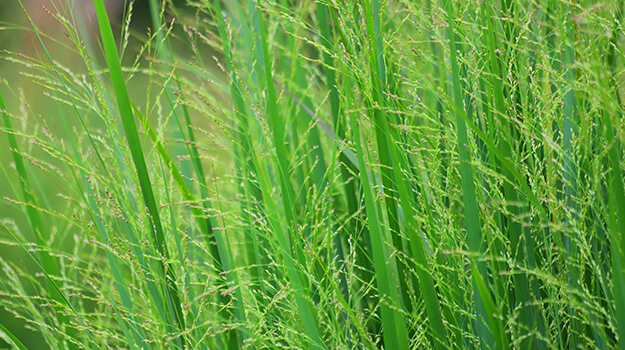
Panic grasses are the preferred plants for hot, dry locations. Their spectacular inflorescence forms a cloud of colour just above the foliage. Resilient and requiring little care, they are among the grasses that remain standing despite strong winds, torrential rains and the bite of the first frosts.
Where is the best place to plant Switchgrass?
With its elegant and distinctive appearance, panicum can be used in both formal and informal gardens. It can be used to create borders and flower beds, or to add a natural, textured touch to prairie-style gardens.
While large panicums are eye-catching in a mixed flower bed, smaller varieties are best planted in clumps. Varieties that prefer moist soils can be used around ponds. Panicums are also an excellent choice for curbing erosion.
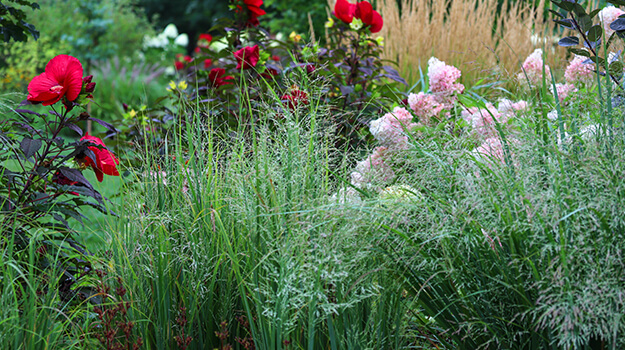
What to plant next to tall grasses?
Panic grass creates beautiful contrasts with brightly coloured perennials such as echinaceas, rudbeckias, asters, sages and daylilies. For a rustic effect, it can be combined with fall-blooming anemones, aralias, tall bellflowers, other grasses such as miscanthus or calamagrostis, or shrubs with contrasting foliage, such as elderberry.
Learn how to grow and when to prune panicum in our other article.
Landscaping with Pennisetum (Fountain Grass)

Also known as fountain grass, pennisetum is a small grass, but that doesn't stop it from being a firm favourite. In northern regions, some varieties are grown as annuals. This is the case with the popular Pennisetum setaceum Rubrum.
Perennial varieties aren't the first to start in spring, but their subsequent rapid growth rewards us for our patience (planting them alongside spring bulbs makes us forget their slow start). And what about their foxtail-shaped flower spikes that dance in the slightest breeze!
Where is the best place to plant fountain grass?
Versatile and easy to combine with other plants, pennisetum creates a beautiful effect in flower beds, borders, rockeries and flower meadows. It will look great with natural materials such as wood, stone or gravel, making it an excellent choice for a mineral garden.
Finally, it can be grown in pots to add a touch of lightness and movement, and its beautiful spikes can be harvested to create bouquets of fresh and dried flowers.
What plants go well with fountain grass?
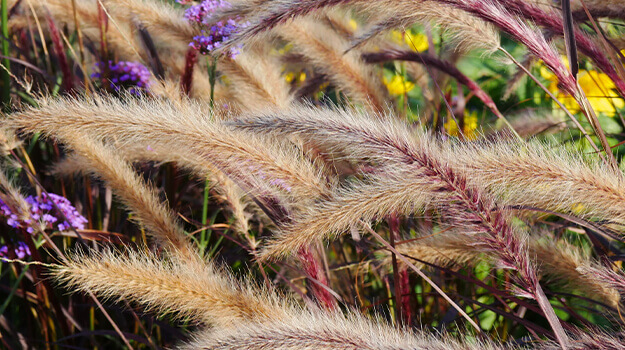
In a bed of grasses, pennisetum can be combined with miscanthus or stipa and can add softness, lightness and movement to roses. In a flower bed, it will be enhanced by colourful perennials such as rudbeckias, echinaceas, sedums, verbenas and anemones.
Learn how to grow and when to prune pennisetum in our other article.
Landscaping with carex
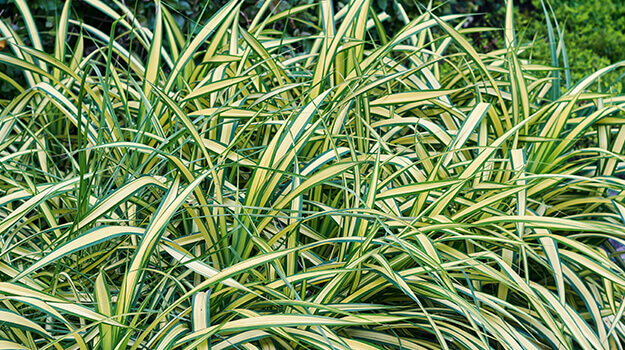
The plant is very pretty, although its flowering is uninteresting. Its foliage, often evergreen, can take on shades of blue, yellow, lime green, silver, etc. It is also often variegated and adopts different shades during the season.
How to use carex in the garden
As its size varies between 10 cm and more than 2 metres depending on the variety, carex is renowned for its great versatility. It can be used to create borders or flower beds, in pots, near ponds or as ground cover. Moreover, some small and medium-sized carexes are used to replace lawns in areas where it is difficult to grow.
Note that most carexes prefer moist, cool soil.
What to pair with Carex?
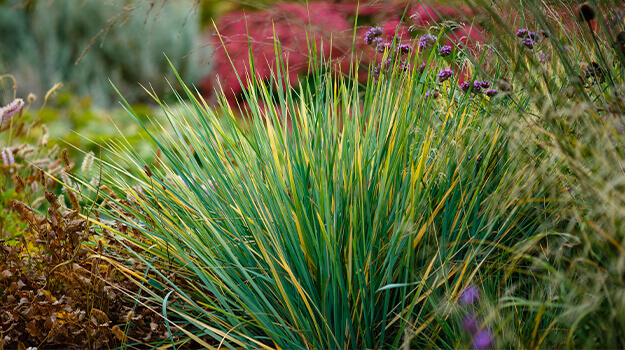
Carex blends beautifully with contrasting perennials, spring bulbs and other grasses. We suggest hostas, heucheras, ferns, persicaria, hakonechloa, pennisetum, blue fescue, tulips, daffodils, grape hyacinths, and abundant-flowering annuals.
Learn how to grow and when to prune carex in our other article.
Landscaping with stipa (Mexican feather grass)
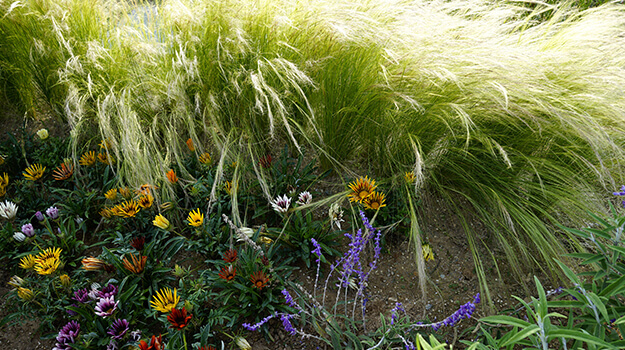
Stipa, also known as feather grass, is a unique way to add a touch of lightness to your garden. Its beautiful inflorescences dance in the wind, swaying in the slightest breeze. If you live in a northern region, choose a cold-hardy variety or give your plant winter protection.
How to use stipa in the garden
Stipa is beautiful in association with other light and elegant perennials. It is used both in borders and in beds for its light and graphic appearance. Stipa also makes magnificent potted plants and its inflorescences instantly enhance any bouquet of fresh or dried flowers.
On a more practical side, it can be used to stabilize sandy or sloping soils.
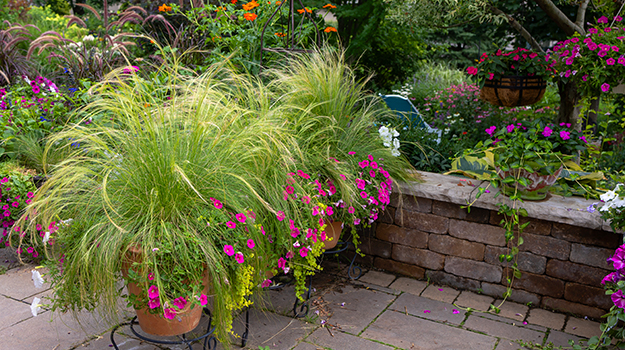
What pairs well with Mexican feather grass?
Stipa goes well with brightly coloured plants such as echinacea, gauras, tall verbenas, sages, lavenders, fall-blooming anemones, roses and other grasses such as miscanthus. It looks great with plants that sway in the wind, but creates a very interesting contrast alongside rigid plants such as yuccas.
Learn how to grow and when to prune stipa in our other article.
Landscaping with fescue
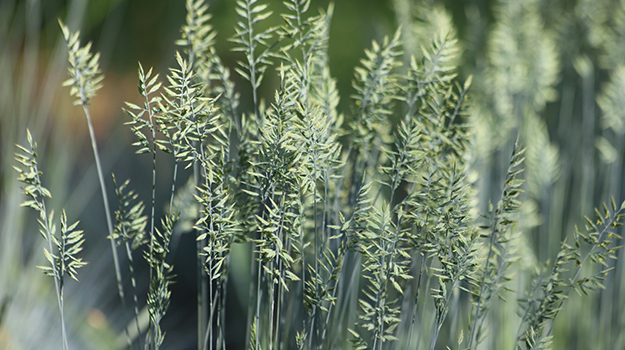
Fescue is an ornamental grass valued for its rounded, compact shape and evergreen, often silvery blue foliage.
Where is the best place to plant blue fescue?
Easy to maintain, it can be used in borders as well as in rockeries and flower beds. As it likes poor soils, it is very popular in dry gardens, and the fact that it thrives in full sun makes it a plant of choice in Mediterranean gardens.
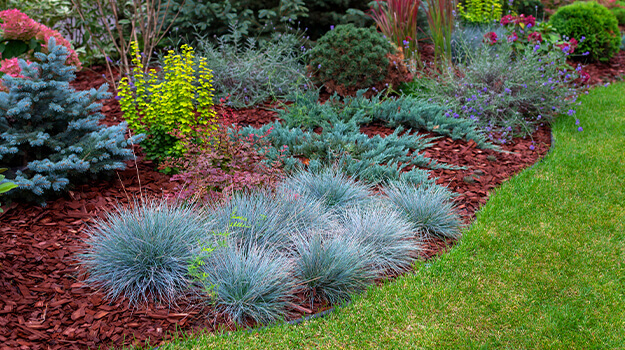
What can I plant next to fescue?
With its often bluish foliage, fescue goes well with plants with silver or purple foliage. Use it with white or pastel blooms for a soft effect. Fescue can also be used to highlight colourful flowers like rudbeckias, gaillardias or poppies. It can also be planted at the base of climbing plants like clematis!
Learn how to grow and when to prune fescue in our other article.


