
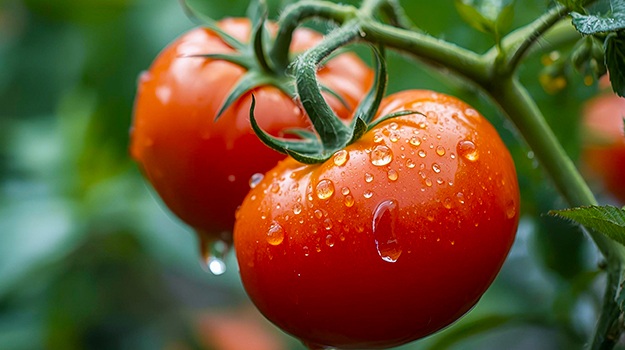
Tomatoes are heavy feeders that generally need quite a bit of fertilizer to get them through the season. The tricky part is figuring out which fertilizer is best, how much to use and when to apply it. Don’t worry though: fertilizing tomatoes isn’t as complicated as it may seem.
How to enrich the soil before planting tomatoes
Tomatoes thrive in full sun. Ideally, they should receive 6 to 8 hours of sunlight per day. They also appreciate a sheltered spot away from strong winds, and while they need plenty of water, they do not tolerate waterlogged soil well.
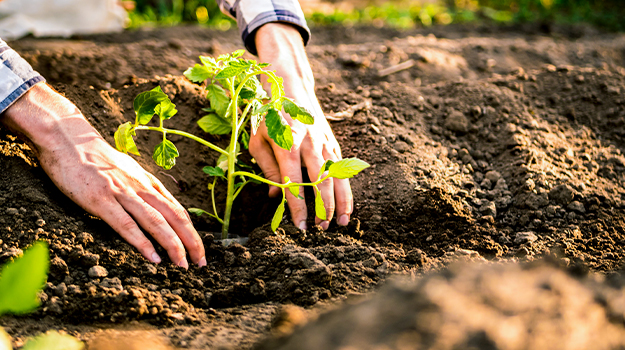
To provide them with optimal growing conditions, the soil must first be prepared before planting. Once the soil is loosened, enrich it by incorporating our Vegetable & Herb Mix into the top few centimetres. This mix lightens the soil, ensures excellent drainage and provides essential nutrients. You can also add well-rotted compost or composted manure.
Plant once all risk of frost has passed, the soil has warmed up and the nights are mild enough. For more advice on starting tomatoes, consult our tomato guide.
Tip : The soil in a vegetable garden needs to be enriched every year, as heavy-feeding plants will deplete some of its nutrients throughout the season. Regular fertilization is certainly possible, but without any amendments. The quality of the soil will change over the years, becoming compact and hard or gradually taking on a dusty texture.
What is the best fertilizer for tomatoes?
If your soil is poor or you don't want to use manure, you can opt for a good quality fertilizer. Pay attention to the three numbers on the packaging: they indicate the levels of nitrogen (N), phosphorus (P) and potassium (K).
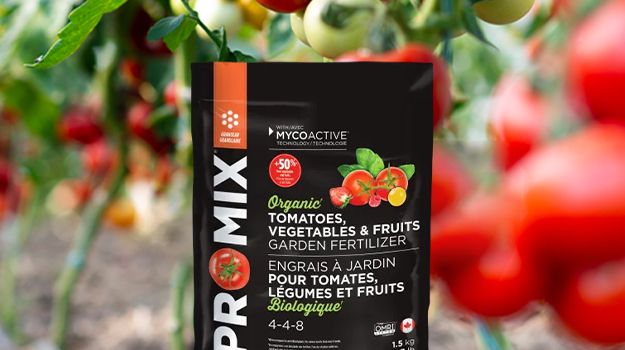
Some growers prefer to use a fertilizer rich in phosphorus, with the level corresponding to the middle number. You can also simplify things by using a fertilizer specifically formulated for tomatoes, such as our Organic-Based Garden Fertilizer for Tomatoes, Vegetables and Fruits 3-6-12 or our Organic Garden Fertilizer for Tomatoes, Vegetables & Fruits 4-4-8.
Avoid fertilizers high in nitrogen (first number), as they produce excessive foliage at the expense of fruit. Phosphorus and potassium, on the other hand, encourage good root development and fruit production, which is exactly what you want.
It is very important to avoid overfertilizing. It's better to use less than to use too much.
When to fertilize tomatoes?
At planting time, it is recommended to give the plants a boost with a little fertilizer, such as our ROOT BOOSTER growth stimulant, to ensure a good start. Apply the fertilizer according to the manufacturer's instructions.
Afterwards, spread fertilizer around the plants every 3 to 4 weeks during the growing season. Fertilize weekly or every two weeks if you are using a water-soluble fertilizer or growing in containers. In pots, plants have access to fewer nutrients, and frequent watering tends to leach them. To avoid overfertilizing, follow the recommendations on the packaging regarding application frequency and the amount of fertilizer to use.
However, fertilizing tomatoes should be avoided under certain conditions, as there is a risk of burning the roots, worsening water stress or stimulating the production of unnecessary foliage at the expense of fruit.
Do not fertilize:
- Immediately after transplanting or repotting. Unless you are using a root stimulator to encourage root development, wait until the plant has had time to establish itself before fertilizing.
- When the soil is very dry. Water first. Fertilize later if necessary.
- During a heat wave, as plants are already under stress. Wait until temperatures return to more moderate levels before resuming fertilization.
- When the plant is wilted or diseased. Address the problem before fertilizing.
In summary, the best time to fertilize is early in the morning or late in the day, on soil that is already moist.
How to fertilize tomatoes?
With a granular fertilizer
If you choose a granular fertilizer, such as our Organic Garden Fertilizer for Tomatoes, Vegetables and Fruits 4-4-8, use the end of your hoe to make a shallow furrow around the plant, 5 to 6 inches (12-15 cm) from the stem. Sprinkle the fertilizer into the furrow at a rate of 1 to 1 ½ tablespoons (15-21 ml) per plant. Cover the fertilizer with soil and mulch.
Be very careful not to get fertilizer on the leaves or stem. Water thoroughly immediately after fertilizing to ensure the fertilizer is evenly distributed to the roots.
In addition to nourishing the plants, our Organic Garden Fertilizer for Tomatoes, Vegetables and Fruits improves soil nutrition and optimizes growing conditions, producing healthier plants.
With a water-soluble fertilizer
Water-soluble fertilizers, like our Organic-Based Garden Fertilizer for Tomatoes, Vegetables and Fruits 3-6-12, are easy to use and have the advantage of being quickly absorbed by the roots. There is also less risk of burning the roots, and since you fertilize while watering, you save time.
Simply mix the fertilizer in a watering can at a rate of approximately 1 tablespoon (15 ml) per gallon (4 L). Apply weekly or every two weeks throughout the season.
If you are using the fertilizer in the garden, mix approximately 2 tablespoons (30 ml) per gallon (4 L).
You should avoid applying fertilizer in very hot or very dry weather. Note that 4 L of solution will fertilize approximately 4 ft2 of garden or 10 eight-inch pots.


