
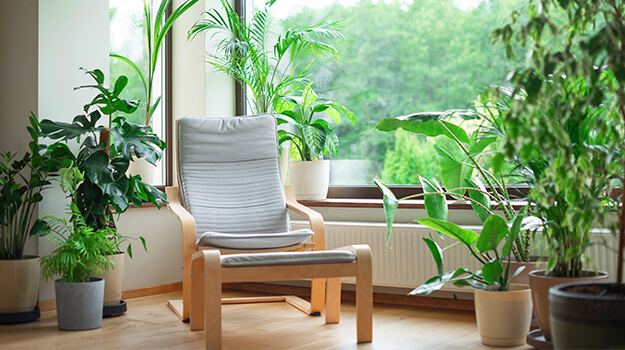
Forget about keeping annuals on life support all winter, hoping they’ll still have enough life left in them come spring to give you cuttings. The plants we’re showcasing here have what it takes to transform your décor and wow your guests. Let the show begin!
What is a true annual plant?
First, it’s important to know that almost all summer plants are perennials somewhere in the world. We say “almost”, because in fact, we could say that there are true annuals… and false annuals.
Most plants sold as annuals at garden centres aren’t actually annuals. They’re perennials in their native climate that simply don’t survive more than one season when grown elsewhere. This is the case with plants sold as annuals in northern regions because they can’t tolerate frost.
The list is a long one. We could name the great classics: begonias, pelargoniums and petunias. We could also use lantanas as an example to show just how tough our so-called annuals can be under different growing conditions. These summer-container favourites in northern regions are listed among the 100 worst invasive plants in tropical and warm-temperate regions.
True annuals are plants that complete their entire life cycle in a single growing season, even in their native region. During a given period, they germinate, grow, produce seeds, reseed themselves and die. The species survives solely because its seeds allow the cycle to repeat year after year. The best-known species in this category are probably sunflowers, cosmos, marigolds, zinnias and poppies.
Large plants that structure the space
During the warmer months, we grow them in pots on the patio, in the ground or in window boxes. Sometimes large, with a long blooming season and still looking stunning at the end of summer, they more often than not end up in the compost bin after the first fall frost.
Yet many of them make incredible houseplants, offering vibrant foliage, a majestic growth habit or a size that surpasses that of most houseplants.
In the living room, bedroom or bathroom, they can transform a space in no time. Simply bring them indoors for an instant jungle effect!
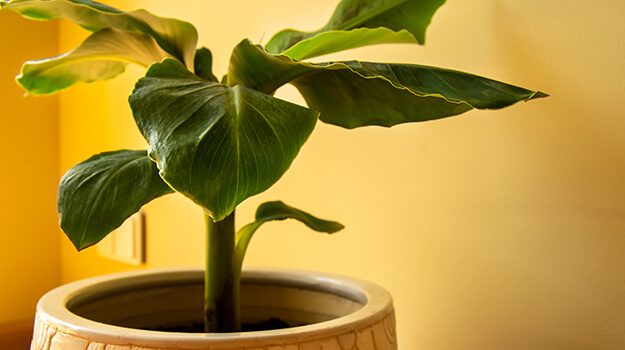
Growing a banana tree indoors
With its unmistakably exotic look, the banana plant produces enormous leaves in vibrant shades of green, red or purple, as well as varieties with cream-and-white variegation. It can reach 2 metres in height, and some varieties, such as Dwarf Cavendish, can even produce fruit after a few years when grown under ideal conditions.
Bring your palm tree inside for a change of decor
Nothing adds a tropical touch to your décor quite like a palm! Easy to grow in the garden, palms are the stars of summer patios. To keep yours from meeting an untimely end, bring it indoors before nighttime temperatures drop below 10 °C.
Before bringing your palm indoors (or any other large plant!), take the time to repot it, especially if you didn’t do so when you bought it. Palms are often sold in small pots containing little soil or few nutrients, which also makes it difficult for them to retain water. Opt for our Potting Mix.
Use ferns to create a boreal forest in your living room
Spectacular and perfect for the shadier corners of the garden, ferns also make a beautiful addition to the home, where they can create a distinctly northern or Scandinavian look. However, they need high humidity levels that are rarely found indoors, especially in a heated home during the long winter months.
To prevent dry leaf tips and keep your plant thriving, use a humidifier or humidity tray as needed, or place your fern in the bathroom for a beautiful, natural look.
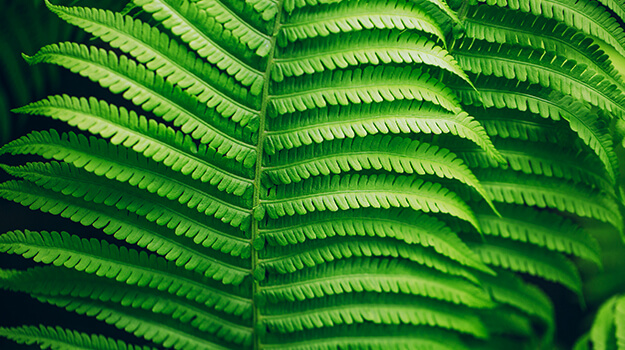
The asparagus fern: light and airy
Undemanding in every way, the asparagus fern thrives indoors and can live for years in the same pot. Simply prune it if its stems become too long. Indoors, the stems of climbing or trailing varieties can reach 2 to 3 metres in length. Success guaranteed!
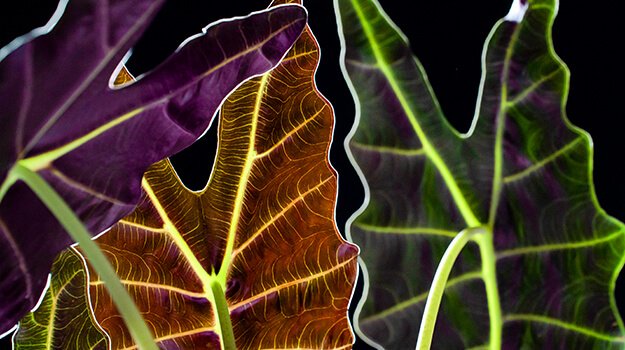
Alocasia: unique and spectacular
Unlike its close relative, colocasia, which goes completely dormant in winter, disappearing entirely and surviving through its corms (underground storage organs), alocasia instead enters a state of semi-dormancy as light levels decrease.
It’s normal for it to lose some leaves in winter—this is its way of slowing down its metabolism. However, even though its growth slows, it makes a beautiful houseplant.
Alocasia or colocasia? Can’t tell which one you’re looking at? Its behaviour in the fall can give you a clue, but some other characteristics are much more reliable when it comes to telling the two apart. Alocasia has a more upright, rigid growth habit, with leaves that point upward. Colocasia has a more spreading, flexible growth habit, with leaves that droop downward.
Good to know: If your alocasia happens to lose all its leaves, don’t throw it out before checking the potting soil. Each bulbil you find can be used to grow a new plant.
Filler plants that steal the show
Filler plants play second fiddle in your summer containers, but they certainly won’t do so in your living room. Outdoors, these plants are chosen to complement and showcase other plants. However, once they’re surrounded by your houseplants, their stunning colours or unique structure are sure to steal the show.
Ornamental sweet potato vine: exceptional colours
The heart-shaped leaves of ornamental sweet potato vine come in an exceptional range of colours. Our favourites: Blacky (black foliage), Gloubiboulga (purple leaves speckled with pale green), Sweet Caroline (bronze leaves veined with purple), Margarita (bright chartreuse green!) and Pink Frost (green leaves streaked with white and pink).
Sweet potato vine prefers full sun but tolerates partial shade. Water when the top centimetre of potting mix is dry, and always empty the saucer. Applying an organic-based, nitrogen-rich fertilizer, such as our Multi-Purpose Fertilizer 12-6-6, every two weeks will also benefit the plant!
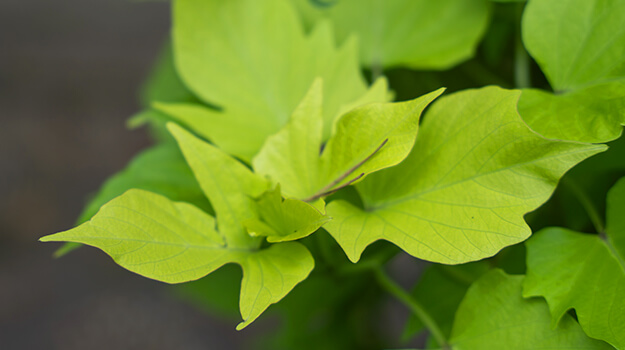
And what about sweet potatoes? Ornamental varieties are edible, but less flavourful. They are grown for their foliage rather than their flowers, which are rare, or for consumption.
A papyrus indoors in winter
With its unique architectural structure, papyrus can be used to create beautiful floral arrangements in summer and add an exotic touch to your home for the rest of the year. Since it naturally grows along the water’s edge, it requires more demanding growing conditions, such as high humidity and plenty of light. Still, it’s a great challenge for those who like to experiment!
There’s nothing to lose by giving it a try!
Eucalyptus: beautiful year-round
With its fresh, delicate fragrance and beautiful colouring, eucalyptus makes an attractive houseplant. Give it plenty of direct light, protect it from drafts and empty its saucer after watering. Its very rapid growth, even in a pot, will likely require occasional pruning to keep it from taking up too much space in your home.
To brighten up the house in winter
To wrap things up, here are five of the most popular garden plants that are worth bringing indoors in the fall. Surprisingly, under the right conditions, they can bloom for long periods. A wonderful way to bring the garden indoors and brighten up the dreariest months of the year.
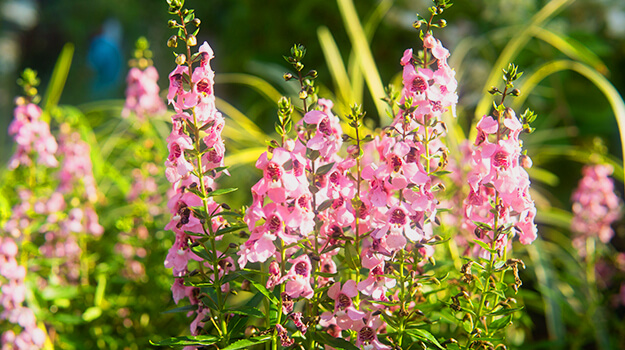
Gorgeous angelonia
Named Flower of the Year in 2024, this stunning tropical perennial is grown as an annual farther north. Throughout the season, it produces tall spikes of colourful, sometimes bicoloured flowers in shades of blue, white, pink or purple, with a shape reminiscent of snapdragons. Good to know: to bloom, it will need a very sunny window.
Versatile bellflowers
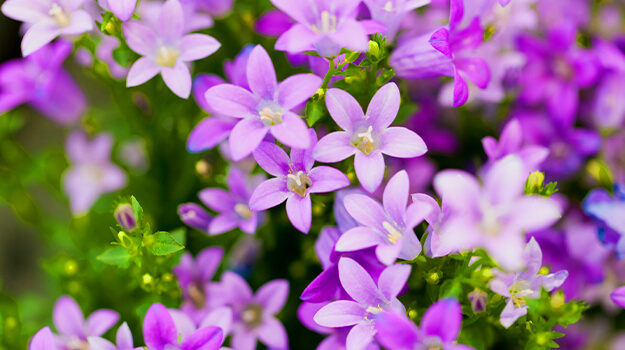
The bellflower is one of the few plants that truly thrives indoors, preferring bright, indirect light, relatively cool temperatures and moderate watering.
Best indoor varieties:
- Campanula isophylla: Sometimes sold as a houseplant. In a hanging basket, its trailing stems cascade beautifully over the sides of the pot.
- Campanula portenschlagiana: Very hardy and generous with purple flowers, it blooms over a long period.
- Campanula poscharskyana: Very easy to grow and highly floriferous indoors, it produces lilac-blue, star-shaped flowers.
- Campanula carpatica: This compact variety, with white or purple flowers, is well suited to sunny windowsills.
Why not bring your canna indoors?
This tropical bulbous plant rivals your most beautiful houseplants. We love its impressive size and upright growth habit, which make it a standout plant in the home.
Canna is no more demanding indoors than it is in the garden. Even without flowers, its highly graphic foliage—in bright green, bronze, purple or variegated with yellow, red or cream stripes—adds colour and structure to your décor.
To bloom, it will need at least six hours of direct sunlight a day, warmth (between 18 °C and 25 °C), regular and generous watering, and a pot large enough to accommodate its growth. Learn more about growing canna indoors in our other article.
Keeping a black-eyed Susan in winter
Thunbergia alata—better known as black-eyed Susan—can’t seem to stop flowering, even indoors. Unlike canna, it takes up less space and adapts better to life in a pot. It will continue to produce flowers in winter if it gets enough light, ideally in front of a south-facing window.
Tip: Using a grow light can make all the difference in compensating for the lack of sunlight in winter!
The best indoor begonias
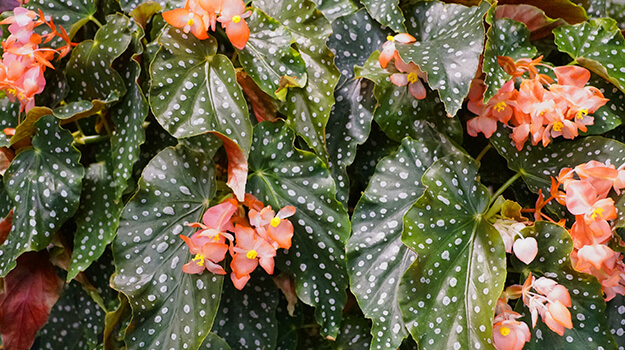
Begonias grown indoors are prized above all for their incredible foliage: spiral or spotted patterns, silvery, pink, purple, violet or frosted-green colouring, iridescent blue hues, and more. While this alone is enough to make them extraordinary houseplants, some varieties also offer the bonus of virtually guaranteed blooms.
- Begonia elatior: Blooming indoors in winter is its specialty!
- Begonia semperflorens: Very resilient, it blooms almost continuously with minimal light.
- Begonia Lorraine: Developed specifically for winter flowering indoors.
- Begonia boliviensis: Blooms generously in front of a bright window.
Bringing your garden indoors
In many regions, summers are too short and gardens all too fleeting. While we’re used to taking cuttings to keep plants for the following season, we tend to think less often about growing outdoor plants indoors, since the success rate is generally disappointing—unless you know which plants will stay beautiful and floriferous throughout the winter in your home.
Some annuals, perennials and bulbs are perfect for bringing life indoors during the dreariest months before returning to their role in the garden the following spring. Another way to extend the growing season is to force your spring-flowering bulbs and start your summer bulbs as soon as the days begin to get longer.
