
TABLE OF CONTENTS
- The origins of the pawpaw
- What does the pawpaw taste like
- How to grow pawpaw in your garden
- Where to plant pawpaw
- Pruning and maintenance
- How long before harvest
Often nicknamed the Appalachian banana or the northern mango, the pawpaw (Asimina triloba) is as little-known as it is remarkable. Yet it has been growing on this continent for thousands of years, long before the arrival of Europeans. Now attracting increasing interest from farmers, home gardeners and chefs in search of new flavours, the pawpaw is truly making a comeback.
The origins of the pawpaw
Native to the United States and Canada, the pawpaw has grown in North America for millennia. It is believed to have once fed mammoths and giant ground sloths. In fact, these prehistoric animals likely helped disperse its seeds and influenced its natural range, which stretches from Nebraska to the Atlantic coast, and from northern Florida up to the Great Lakes, including parts of southern Ontario.
The name “pawpaw,” meaning “papaya” in Arawak (a language spoken by Indigenous peoples of South America), is thought to have been given by Spanish conquistador Hernando de Soto, who reportedly mistook the fruit for a papaya.
While European explorers began documenting this exceptional fruit as early as 1541, Indigenous peoples, including the Iroquois, Choctaw and Cherokee, had been cultivating it for centuries.
A brief history of the pawpaw
The pawpaw tree belongs to the same botanical family as the ylang-ylang tree, well known in perfumery and aromatherapy. However, it stands out as the only member of this family that grows in temperate climates; the others are typically tropical.
The pawpaw fell into obscurity with the rise of industrial agriculture, which prioritized fruits and vegetables with a longer shelf life. It was also overshadowed by the arrival of bananas around 1880, an exotic fruit that was rare and expensive at the time, accessible only to the wealthy. This led to another nickname for the pawpaw: the “poor man’s banana.”
Today, the pawpaw is regaining popularity as ecological movements promote local food production and sustainable agroforestry.
What does the pawpaw taste like?
Describing the flavour of the pawpaw isn’t easy, as it is truly unique. It’s often compared to a blend of banana, mango and custard, with hints of vanilla, pineapple or even papaya. Its creamy, melt-in-your-mouth texture is similar to custard, which explains its English nickname, “custard apple.”
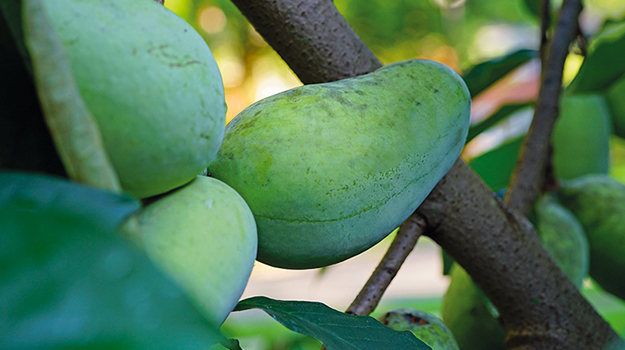
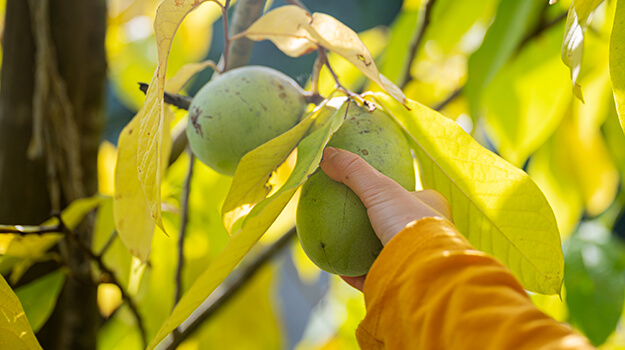
Similar in size to a mango, the pawpaw is the largest native fruit in North America. Its greenish-yellow skin hides a pale yellow to orange flesh filled with about a dozen large, smooth black seeds that are easy to remove. Pawpaws are best eaten when fully ripe, when the skin just begins to darken and yields slightly to pressure (like a ripe avocado).
It can be eaten with a spoon, cut in half after removing the seeds, or prepared in various ways:
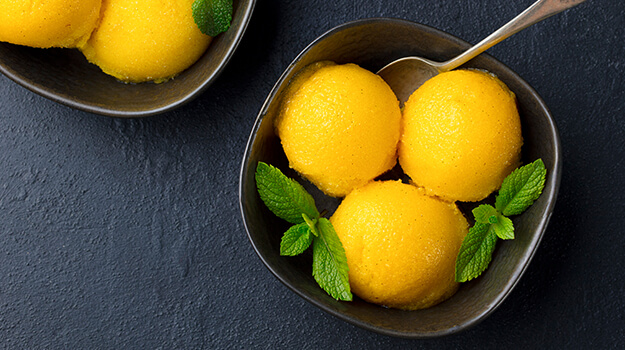
- in ice cream or sorbet… their naturally creamy texture is a major advantage
- in pies and baked goods, as a substitute for banana or mango
- in smoothies or milkshakes, blended with coconut milk or yogurt
- in breads and muffins (a twist on classic banana bread recipes)
Because pawpaws only keep for about three days at room temperature (or up to a week in the refrigerator), they are difficult to market on a large scale. This explains why they are rarely found in grocery stores. However, since they freeze well, they may soon become more available in the frozen foods section. Still, the best option is to grow your own!
Health benefits of the pawpaw
Pawpaws are rich in vitamin C, magnesium, iron, copper and manganese. They also contain more protein than most fruits grown in temperate climates and are notably high in antioxidants.
How to grow pawpaw in your garden
Pawpaws grow naturally in Ontario and the northeastern United States, where they can be found both on farms and in the wild. Hardy to zone 5, some adapted cultivars can survive in zone 4 or 4b with winter protection during their early years. In zone 3, they are typically grown as ornamental trees, as flowering, and therefore fruiting, is minimal.
In colder regions, it’s best to choose varieties originating from Ontario or Quebec. Even then, flowering can be unpredictable, as the tree requires a warm summer to produce fruit.
Pawpaw trees need a sunny location, ideally south-facing and sheltered from cold winds. They tolerate partial shade, but fruit production will be reduced. At least two trees of different varieties are generally required for proper pollination.
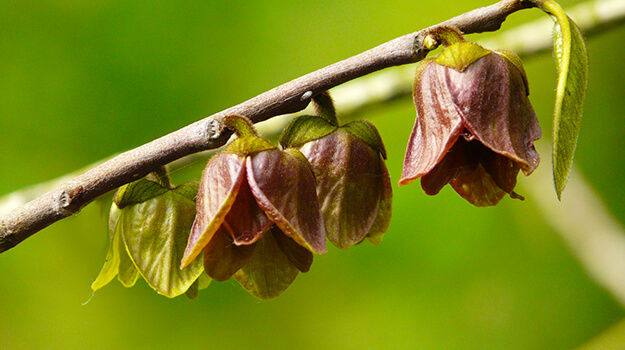
Their discreet red-brown flowers are mainly pollinated by small flies and beetles. Hand pollination using a small brush can improve fruit yield, since natural pollination is not always reliable.
Where to plant pawpaw
Pawpaws are best planted in the spring so they can establish themselves before winter. Choose the location carefully, as their fragile root system does not tolerate transplanting well. For this reason, it’s better to purchase a potted tree rather than attempting to transplant wild seedlings.
They prefer soil that is rich in organic matter, free of stones, moist but well-drained. When planting, mix a generous amount of PRO-MIX All Purpose Mix into the existing soil. Its peat-based composition and the growth stimulant MYCOACTIVE help improve water and nutrient absorption, promoting vigorous growth from the first year.
During the first few years, water during dry periods and apply a thick layer of mulch at the base before winter.
Pruning and maintenance
Once established, pawpaw trees are relatively low-maintenance. A thick layer of mulch helps retain moisture and mimic forest undergrowth conditions. Pruning is minimal and mainly involves removing dead, damaged, crossing or poorly positioned branches that could rub against and damage the bark.
Note that pawpaws can produce suckers from their roots. While some see this as extra work, gardeners with enough space can let them grow to create a dense patch similar to what occurs in the wild.
How long before harvest?
Pawpaw trees grow relatively slowly. While some gardeners start them from seed, young plants (one or two years old) can often be found at specialized garden centres.
From seed, it can take 4 to 8 years before the first harvest. From young plants, fruit production typically begins in the third or fourth year.
Harvest season runs from mid-August to October, depending on the variety and local climate. A well-established mature tree can produce between 15 and 25 kg of fruit per season, sometimes more under ideal conditions.
The pawpaw is much more than a botanical curiosity. From both an ecological and culinary perspective, it is an integral part of North America’s history. While growing it requires patience and planning, it remains accessible to many gardeners and producers. At a time when food biodiversity is more valuable than ever, rediscovering, cultivating and harvesting pawpaw helps preserve the richness of our natural heritage.
