
When gardeners are asked what the most challenging conditions they have to deal with are, total shade comes in first, followed immediately by clay soil.
Of course, growing in clay soil requires more work and determination. Known for being difficult to cultivate, heavy, dense and poorly drained clay soils expose roots to the risk of rot during rainy seasons, and become a concrete-hard prison during droughts.
Despite these drawbacks, clay soils also have advantages, and with a little knowledge and plants adapted to growing in clay, you can grow a lush, diverse and productive garden. Here’s how!
What are the characteristics of clay soil?
A soil is generally considered clayey when it is composed of more than 30% clay. It is made up of very fine particles. When dry, it tends to crumble. When wet, it is heavy and sticky. It retains a lot of water. Its particular composition gives it as many advantages as disadvantages.
This type of soil absorbs water slowly and retains it for a long time. When waterlogged, clay soil is heavy and sticky, and it tends to swell. When dry, however, it contracts, compacts, becomes hard as concrete, and can even crack.
More than half of the soils in the United States are predominantly clay. In fact, modern construction practices, which involve removing the topsoil and humus before building on it, significantly increase the percentage of compacted soils, which are difficult to work.
While it is possible to change soil conditions over time, some challenges require more time and perseverance than others. Trying to loosen and balance clay soil is one of them.
How can I fix clay soil?
Clay soils benefit from the addition of organic matter such as compost, manure or shredded leaves. Organic matter creates humus, which gradually improves the soil's structure, aeration and drainage capacity. It softens its texture, in addition to feeding microorganisms and stimulating microbial activity.
Using green fertilizers and mulches are also good options for improving the structure of clay soils. Organic mulches also have the benefit of retaining moisture and preventing the soil from drying out and cracking on hot summer days.
How to loosen heavy, clayey soil?
Incorporate at least 5 cm of compost or manure into the top 15 to 30 cm. Repeat applications over time.
Organic amendments generally have a more lasting effect on soil structure and fertility, while mineral amendments are usually used to fix specific problems.
Even so, improving clay soil requires time and constant effort. Applying organic amendments will often need to be repeated every one or two years to maintain the soil's properties. Regular additions of organic matter will be necessary since organic matter decomposes and disappears over time. Therefore, it is necessary to renew the amendments regularly.
It's important to understand that soil amendments aim to change the soil structure to make it more flexible, aerated and draining, not to eliminate clay. While you can work to change soil conditions, the easiest way is often to grow plants that like and thrive in clay soils. There are many different options available, as you can see from our list.
TIP: Another way to save yourself some work is to create raised beds and fill them with topsoil.
What is the best time to amend soil?
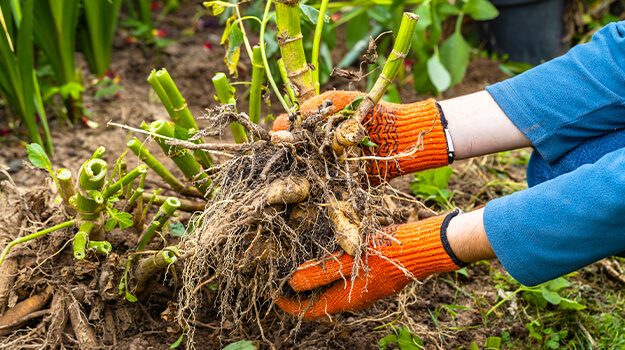
Late winter, early spring or fall are the best times to amend clay soil. It will be easier to work it and incorporate organic matter.
Can you use sand to amend clay soil?
Using sand to improve the conditions of clay soil has long been recommended. However, caution is advised, as when used in large quantities, it can create a concrete effect that will make the soil even more difficult to work.
If you insist on using sand, do so in combination with organic matter.
What are the effects of lime on clay soil?
Lime can improve clay soils if they are acidic. The amount to be used, however, will depend on the soil pH. Therefore, it is not recommended to amend clay soil with lime before conducting a soil test. Too much lime can prevent the uptake of certain nutrients.
What is the best fertilizer for clay soil?
In clay soil, liquid fertilizers can be used, but granular fertilizers are preferable to water-soluble fertilizers because of the slow drainage. This allows for a more gradual nutrient supply.
Avoid using chemical fertilizers. Used in excessive quantities in dense, water-retaining soil, they can harm plant health and threaten soil microorganisms, and also pollute the environment.
Also, be careful not to overfertilize. Too much fertilizer, especially if it's high in nitrogen, can cause plants to grow too quickly and make them more vulnerable to disease and insects. Finally, too much of an unbalanced fertilizer can also cause deficiencies and harm the valuable microorganisms and mycorrhizal fungi present in the soil.
TIP: Choose woody plants (plants that strengthen over time and form wood) that tolerate heavy clay soils and improve their structure over time. For example, arrowwood, lilac or dogwood.
What are the advantages of clay soil?
Rather than trying to change the conditions of clay soil, you can learn to appreciate its benefits. Planting in clay soil will always require more muscle than working sandy soil, but keep in mind that clay soils are rich in nutrients.
They can therefore accommodate a large number of plants that will thrive there, including fruit trees, shrubs, vegetables and flowers.
What can I plant in clay soil?
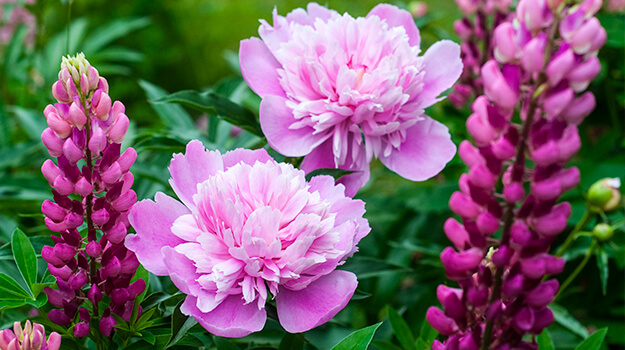
Hardy plants thrive in clay soil. Choose roses, perennials with strong stems (peonies, yarrow, lupines, asters, hollyhocks) and bulbous plants (irises, dahlias, cannas).
Which vegetables appreciate clay soils?
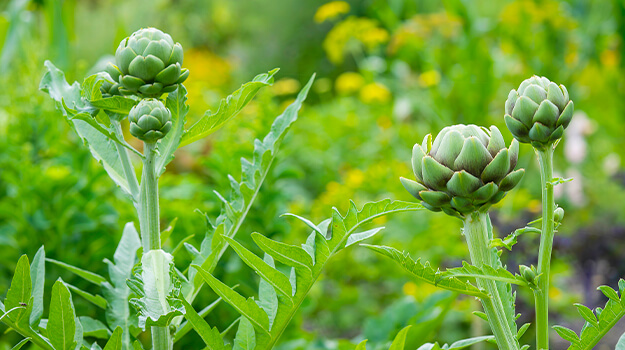
In the vegetable garden, choose vegetables with shallow roots such as lettuce, spinach, leeks, beans, peas, eggplant, peppers, broccoli, Brussels sprouts, cauliflower and artichokes. They will benefit from the clay soil's water retention capacity!
Root vegetables like turnips are also worth growing, although they may have a stronger flavour. As for carrots, since compacted soil can cause them to deform as they grow, choose miniature varieties like baby carrots or short, round varieties like Parisian carrots.
What can you plant in clay soil?
Geraniums, peonies, daylilies, rudbeckias, Japanese anemones, cannas and irises are just a few of the flowers that thrive in clay soil. (See our list for what to plant in clay soil.)
Even if the soil is rich, add compost or a peat-based soil mix such as our Premium Garden Mix to improve soil quality and prevent water from stagnating near the roots.
Shrubs that thrive in slightly amended clay soils
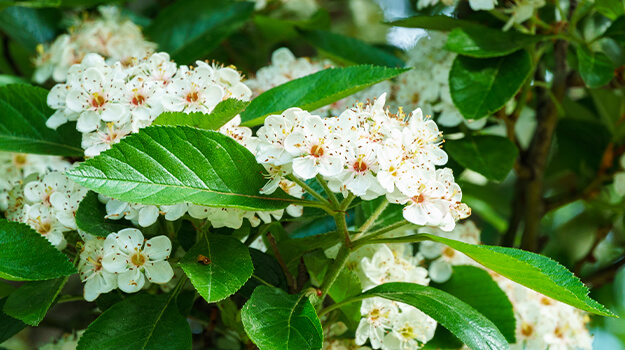
As for shrubs, there is also a beautiful variety of plants with colourful foliage or flowers that will create magnificent gardens in clay soil: hawthorn, lilac, elderberry, dogwood, burning bush, mahonia, rose bushes, arrowwood, etc.
When planting, avoid overpacking the soil to prevent compaction. Monitor watering during dry periods, especially in the first year.
When to plant in clay soil
Ideally, plant in the fall when the soil is warm and well rehydrated. Not only will it be easier to dig, but it will also be easier to incorporate compost or manure, which will enrich the soil and improve its structure.
Early spring is also a good time for landscaping or planting (tree, shrub, hedge, etc.) in clay soil. However, make sure that the soil is not too waterlogged, as this can seriously harm the health of the plants and the soil structure.
This condition causes root asphyxiation and promotes disease and fungal growth. Lack of aeration can also slow or prevent plant growth by making it difficult for roots to absorb nutrients.
How to plant in clay soil
- Dig a hole three times the size of the root ball.
- Loosen the bottom and add a little gravel if necessary to increase drainage.
- Add soil, compost or an organic amendment to the original material. Avoiding creating a basin that will retain water at root level.
- Plant without burying the root ball too deeply. The first roots should be flush with the soil to prevent crown rot.
- Avoid compacting the soil too much, especially if it is wet.
TIP: If the soil is dry and hard when planting, water first. Allow time for the water to soak in before you start digging.
Easy TEST to find out if your soil is clayey
Clay soil is recognizable by its colour (grey or reddish, depending on the region), but not necessarily. If you don't want to do a soil test, you can do the ring test. It allows you to quickly and easily determine if your soil contains a significant percentage of clay.
Moisten the soil and take a handful from a depth of about 15 cm. If you are unable to form a ball, your soil is sandy. If your ball crumbles and falls apart easily, you have soil that contains a good proportion of sand.
If your ball holds together but you can’t form a “sausage”, you have loamy soil. If you can roll it between your fingers and form a ring without it breaking, you know your soil is clayey.
A soil test will confirm and tell you more about the composition of your soil. However, this quick little test is a great place to start!
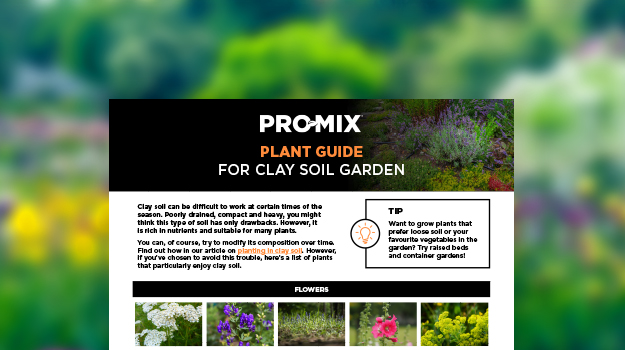
Discover the complete list in our practical guide to plants for clay soil.


