

- Should ornamental grasses be cut back in the fall?
- How to maintain grasses after winter?
- What is the best time of year to plant ornamental grass?
- How to plant ornamental grasses
- What is the best soil mix for ornamental grasses?
- Where is the best place to plant ornamental grasses?
- What is the best fertilizer for ornamental grasses?
- Do you need to water ornamental grasses
- When's the best time to divide ornamental grasses?
- The benefits of mulching ornamental grasses
- How do you keep ornamental grasses over winter?
- Are grasses susceptible to disease?
Ornamental grasses are unparalleled for beautifying the garden. They offer a wide selection of varieties ranging in size from a few centimetres to over 3 metres, with diverse shapes and forms, and, above all, exceptional colours that change with the seasons.
As if that weren't enough, their plume-like or spike-like inflorescences also take on striking colours ranging from blue to pink, purple, red, silver or black. As long as you avoid invasive species, grasses are virtually maintenance-free and can be satisfied with little. As a bonus, they are resistant to a variety of conditions, including the cold, heat, wind and drought. Here’s how to care for them.
Should ornamental grasses be cut back in the fall?
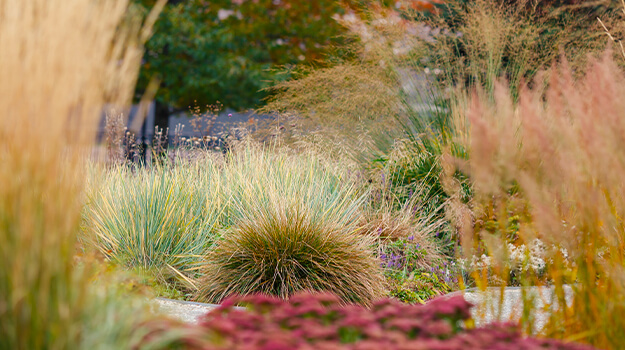
The question that keeps coming up: should grasses be cut back at the end of the season?
Those who like to clean up their entire yard at the end of the season will probably be disappointed to learn that cutting ornamental grasses in the fall isn't a good idea at all.
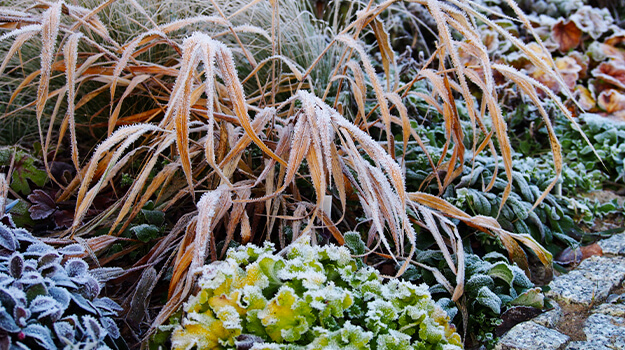
Indeed, while some varieties of evergreen grasses will have difficulty growing again in the spring, others (those with deciduous foliage) rely on their foliage, even if it’s dried out, to protect their roots from the frost. So, in either case, wait until the end of winter or the beginning of spring to untangle or cut your ornamental grasses.
How to maintain grasses after winter?
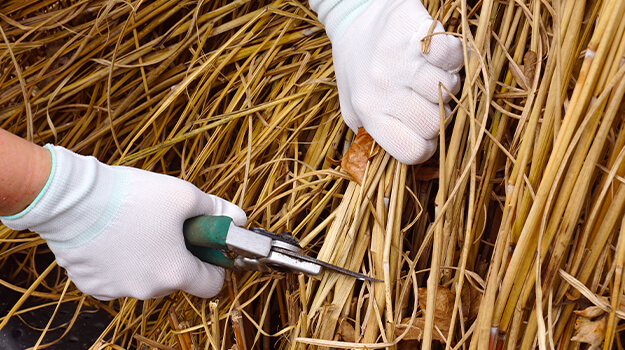
There are two types of grasses: evergreen and deciduous.
Deciduous grasses are easy to recognize by their dried-out foliage. They should be cut back to 10-15 cm from the ground after winter, before new shoots appear.
The most widely grown evergreen grasses include blue oat, sedge, fescue, stipa and Provence cane. They remain beautiful in winter, showing only a few dried leaves here and there at the end of the cold season. In their case, maintenance consists of simply removing dead or damaged leaves.
Do not prune them. Wear gloves (grass leaves can be sharp) and untangle them from the bottom up, using your fingers or a hand rake, depending on the size of the plant and its leaves. This helps to untangle the leaves, remove dry parts, aerate the plant and encourage the development of new shoots.
While they may not offer the same winter appeal as evergreen grasses, deciduous grasses can still beautify the landscape for part of the winter. They also provide shelter for wildlife and feed birds during the cold season. These are all reasons not to cut them back too quickly!
What is the best time of year to plant ornamental grass?
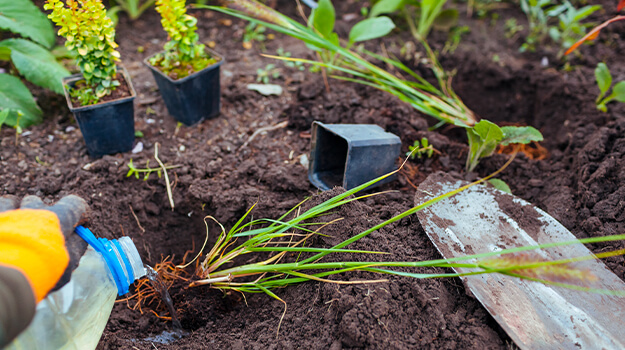
Ornamental grasses are ideally planted in early spring (March to May) to give them time to establish before the heat sets in. They can also be planted in the fall, but you should avoid periods of frost and intense heat. In addition, you will need to ensure that your plant is well watered if the weather is dry. Just because the temperature is cool does not necessarily guarantee good recovery.
How to plant ornamental grasses
Many grasses are perennials that spread quickly. That's good, as that's usually what you're looking for. Be sure to respect the recommended distances between plants. These will vary depending on the variety. To enjoy their full potential, make sure to give both upright and trailing varieties enough space to fully develop.
PRO TIP: Leaving enough space between plants isn't just a matter of aesthetics. It also allows the air and light to circulate better, prevents harmful humidity for certain species and makes maintenance easier.

To encourage healthy grass growth, make sure to dig a planting hole 2 to 3 times wider than the root ball. Add compost or a soil mix containing sphagnum peat moss, such as our All Purpose Mix, to enrich the soil and improve drainage. While many grasses thrive in moist soil, few thrive with their roots in water.
If your soil is poorly drained, choose a higher location (like a mound) or place gravel or sand at the bottom of the planting hole to prevent water from stagnating.
TIP: Has your ornamental grass spent too much time in its pot? Twisted roots can delay establishment and slow the plant's growth. Gently untangle its roots with your fingers or make a few vertical cuts with a clean knife.
What is the best soil mix for ornamental grasses?
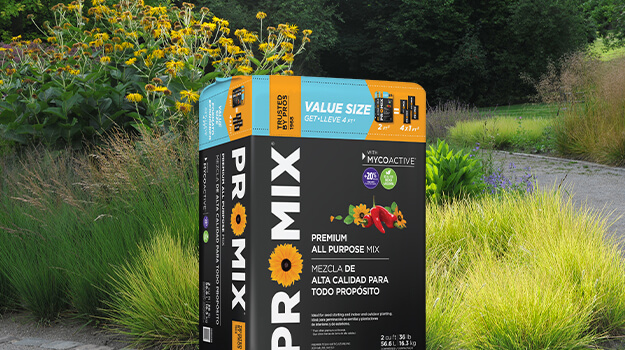
Grasses aren’t picky when it comes to soil. Many thrive in poor, dry soil, even stony or sandy soil. However, it is best to loosen heavy or clayey soil before planting.
Some varieties, such as miscanthus, thrive in cooler, even moist soil (like Japanese grass), as long as it is well-drained to prevent water from stagnating. It can be enriched at planting by adding compost or a quality soil mix.
Where is the best place to plant ornamental grasses?
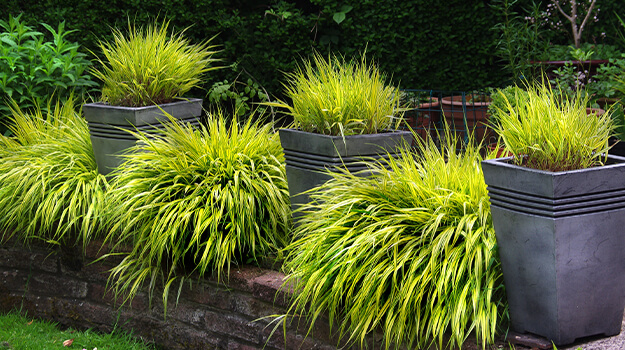
Where do ornamental grasses grow best… In shade, partial shade, full sun?
While ornamental grasses thrive in a variety of conditions, most prefer full sun. In partial shade, some varieties will tend to flower less or lose some of their beautiful colouration.
Blue oat grass, stipas, miscanthus, pennisetums and panic grasses generally prefer full sun. Calamagrostis, ophiopogon and deschampsia often prefer partial shade. Finally, sedges, purple moor grass and hakonechloas tolerate partial shade or shade well. However, this depends on the variety. To find the ideal location for your plant, consult the label or ask for information at your garden centre.
PRO TIP: Ornamental grasses are also capable of withstanding the wind. Planting them in an exposed location will give you the chance to see their beautiful foliage move. However, remember to apply mulch around their base to protect their roots from frost. In an unsheltered location, the snow will inevitably be blown away by the wind and your plants won't benefit as much from its insulating properties.
What is the best fertilizer for ornamental grasses?
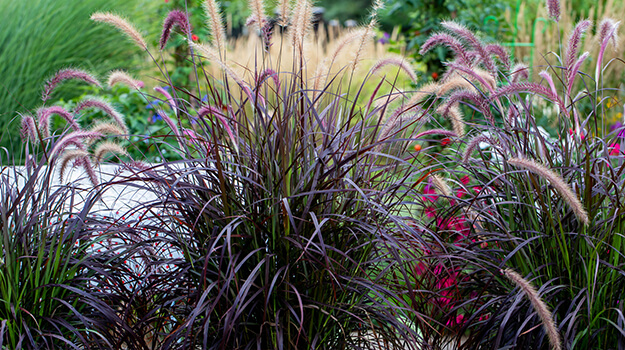
Ornamental grasses are truly uncomplicated and generally require no fertilizer, other than a little compost or manure when planting. Very bushy varieties can also benefit from being fed once a year. However, too much fertilizer can be harmful, making them less colourful, less compact or less rigid.
Avoid nitrogen fertilizers (which have a higher first number). If you must fertilize your ornamental grasses, give them a balanced, organic, slow-release fertilizer.
PRO TIP: However, note that when the centre of a ornamental grass becomes empty, your plant seems less rigid or seems to have lost its vigour, it is often a sign that it is time to divide it. A few spade strokes and everything will be back to normal!
Do you need to water ornamental grasses
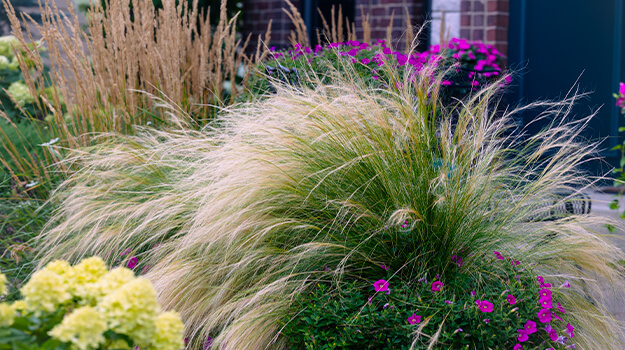
It is important to water thoroughly after planting, and then regularly during the first year. Since ornamental grasses are very hardy, they will only need to be watered during periods of prolonged drought and intense heat. Otherwise, the rain will be enough.
Are you growing your grass in a pot? Since its access to water is more limited, you'll need to ensure it's adequately hydrated. Make sure the drainage holes allow for efficient water drainage.
When's the best time to divide ornamental grasses?
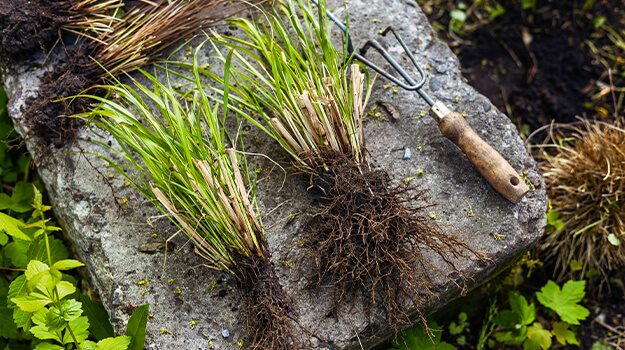
If your grass becomes empty inside, grows too large or loses its vigour, you can divide it. Ornamental grasses are propagated in the spring or fall, when the weather is neither too hot nor too cold.
The best way to divide is to dig up the entire plant and cut it in half with a sharp spade or axe. (Clean the blade thoroughly to avoid spreading disease.) Then divide each half into separate sections, making sure to keep enough roots.
The benefits of mulching ornamental grasses
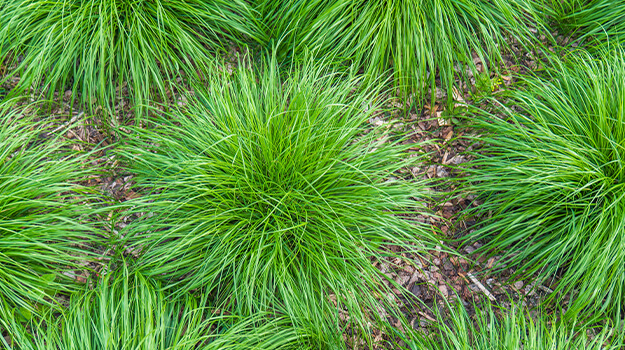
Applying 2.5 to 5 cm of mulch around your ornamental grass (taking care to clear the base of the plant) has several benefits:
- It reduces watering needs.
- The soil stays cooler even during periods of extreme heat.
- It limits weeds.
- It protects the roots from the frost.
How do you keep ornamental grasses over winter?
Ornamental grasses grown in their hardiness zone survive the winter without difficulty. Avoid pruning them in the fall and, if necessary, add a layer of mulch around the plant. These two precautions help protect the roots from the frost. Evergreen grasses can be tied up to limit damage from the wind and snow.
If your ornamental grass is grown in a pot in a northern climate, bury the pot in a flower bed. Interesting fact: annual grasses (or those grown in a region below the recommended zone) can be kept indoors over the winter.
Are grasses susceptible to disease?
Ornamental grasses are resistant to both insects and diseases. They are rarely attacked, and when they are, the plant is usually not seriously affected. The biggest threat to ornamental grasses is excess water and humidity (with rare exceptions that thrive in humid environments).
Make sure you grow your ornamental grasses in well-drained soil to prevent their roots from rotting.
While you can choose where you plant, you can't control Mother Nature's moods. For example, during a very rainy season or periods of prolonged humidity, switchgrass can be prone to rust.
Some ornamental grasses can also be affected by red thread disease (reddish threads visible at the tips of the leaves) or powdery mildew (black spots appear on the leaves).
Keep an eye on your plants and, if necessary, remove affected leaf parts to limit the progression of the disease. Helminthosporiosis and snow mold (yellow or brown spots surrounded by white mycelium) are more devastating. In some cases, the plant cannot be saved.

PRO TIP: A good way to prevent disease is to respect the recommended planting distances. Don't plant your grasses too close together!
