Table of contents
- How to identify Princettia
- A plant designed to stand out
- The benefits of Princettia
- How to care for Princettia
- How to care for poinsettias after Christmas
- Princettia: the reinvented Christmas star
Many holiday classics have been revisited over the years, for better or for worse. Think of Charles Dickens’s literary classic “A Christmas Carol”, which has been adapted for the screen countless times, the traditional holiday meal reimagined with vegetarian options, or the Advent calendar, where biblical images have been replaced with treats.
The poinsettia christmas flowers also received a royal makeover with Princettia, a stunningly floriferous version that is more compact, longer-lasting and boasts colours that rival those of the iconic holiday plant.
How to identify Princettia
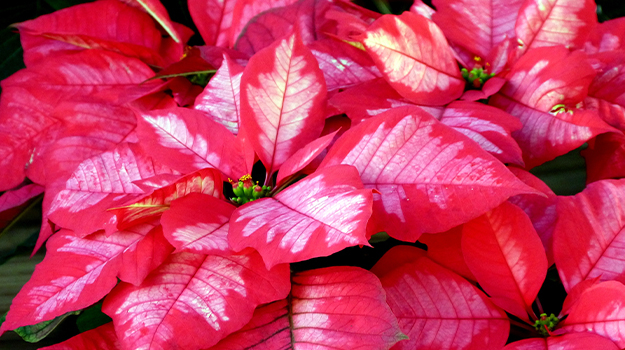
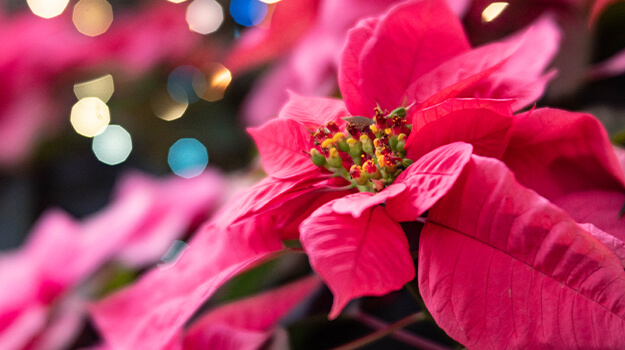
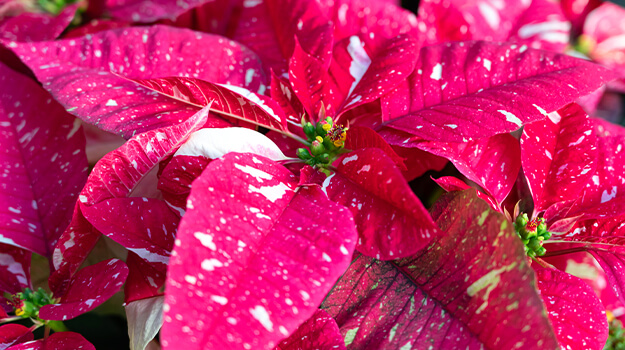
With its luminous pink hues, pure whites, deep reds and dazzling patterns, Princettia breathes new life into the iconic Christmas star. Perfect for festive decor, it also fits beautifully into more understated interiors, adding a splash of colour throughout the cold season.
Princettia belongs to the large Euphorbia family, just like the classic poinsettia (Euphorbia pulcherrima), whose colour range breeders have subtly enhanced over the years. (This has nothing to do with blue, purple or glittery poinsettias, which are the work of retailers and are anything but natural!)
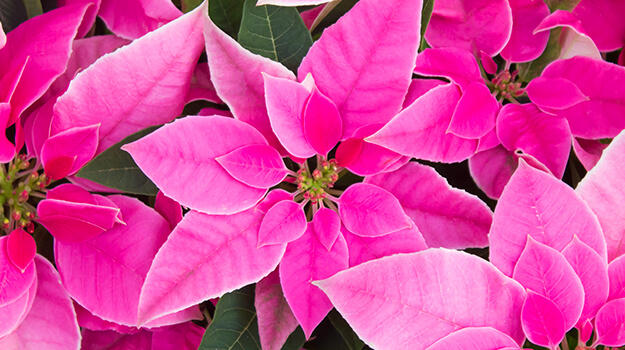
Princettia, however, has a distinct appearance. It is more compact, highly branched and generously covered with small, colourful bracts. These are often mistaken for flowers, but they actually surround the true flowers, which are much smaller and can be seen at their centre.
The result? A dense, rounded plant with an abundance of colour like never before.
A plant designed to stand out
Princettia breeders have succeeded in enhancing the most desirable qualities of traditional poinsettias while eliminating some of the minor drawbacks that explain why so few of these plants remain in homes after the holidays.
Improvements:
- A naturally compact shape, ideal for small spaces and centrepieces
- Abundant branching for more colourful stems
- Smaller but more numerous bracts
- Intense, long-lasting colours
- Greater longevity
- Better tolerance of the heat in our heated indoor environment
The benefits of Princettia
1. A refreshing colour palette
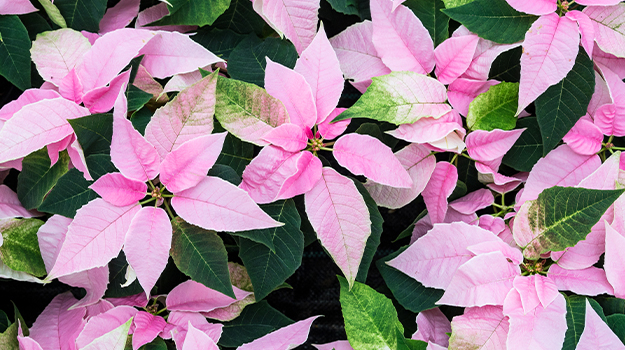
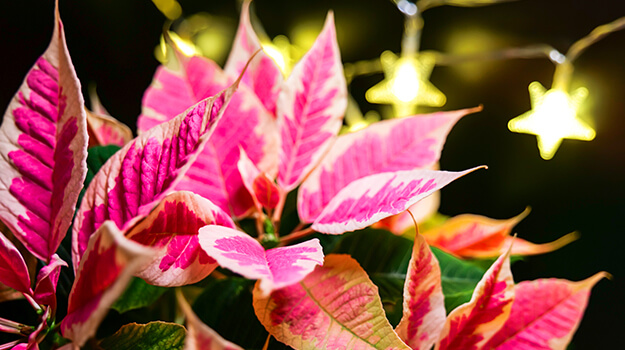
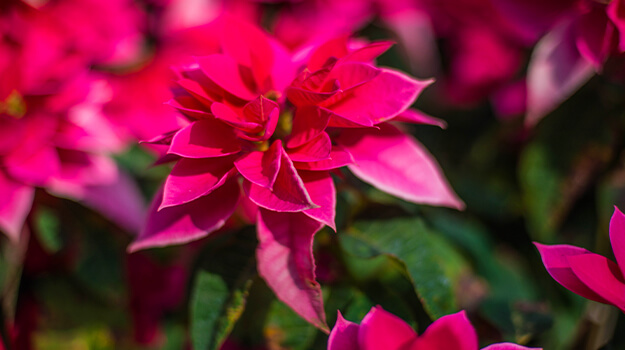
While red remains a timeless classic, Princettia colors stand out with exceptional shades: pale pink, candy pink, fuchsia, raspberry, pure white, pink and white poinsettia or cranberry red. These colours make it easy to create holiday displays that are less traditional and more personalized.
White Princettia works beautifully in minimalist or Nordic-inspired settings, while pink varieties bring a touch of softness or vibrancy to tables, entryways, offices and more.
2. A versatile size
Thanks to its compact, well-branched growth habit, Princettia fits easily on a table, windowsill or shelf. It is also particularly well suited to mixed arrangements and seasonal displays.
Its abundant bracts create a spectacular effect in poinsettia floral arrangements when several plants in different colours are grouped together.
3. Long-lasting beauty
Under the right conditions, Princettia can maintain its vibrant colours for several weeks. Its distinctive qualities allow it to brighten up your home long after the holiday season. Some retailers, impressed by its longevity, are even considering offering specially styled versions for occasions such as Valentine’s Day and Easter.
4. The perfect plant for the home in winter
Princettia brings a splash of colour to the home during the months when flowers are scarce. But it is not limited to life indoors. In regions with mild fall and winter temperatures (where frost is not a concern), it can also be used in outdoor containers and seasonal arrangements.
How to care for Princettia
The good news is that caring for Princettia is much like caring for a traditional poinsettia. Just a few simple actions are all it takes to keep it looking beautiful.
1. Give it plenty of light
Place your Princettia in a bright spot near a window, but avoid prolonged exposure to intense, direct sunlight. In winter, the gentle morning or late-afternoon sun is generally well tolerated. Avoid very dark corners, as insufficient light can cause rapid leaf drop and weaken the plant.
2. Maintain a stable temperature
Princettia thrives at a comfortable indoor temperature of 15 to 22 °C. Keep your plant away from drafts and sudden temperature changes, as temperature shock can cause leaves or bracts to drop prematurely. Place it away from frequently opened doors, poorly insulated windows, heating vents, fireplaces, etc.
Tip: Wrap your plant well when transporting it. Even a few minutes of intense cold can cause serious damage.
3. Water moderately
Don't water on a fixed schedule! Check the potting mix first by touching it. If the top few centimetres are dry, water gently and allow excess water to drain through the drainage holes. Empty the saucer or decorative pot after a few minutes. Constantly soggy soil can cause root rot.
Princettia dislikes both prolonged dryness and waterlogged roots. The goal is to keep the potting mix slightly moist without letting it become saturated.
Tip: As soon as you bring your plant home, remove the decorative wrapping around the pot, as it can trap excess water after watering. Place it in a pretty decorative pot instead… and never let water sit at the bottom!
4. Wait before fertilizing
A plant purchased during the holiday season generally doesn’t need fertilizer, as it has been grown in a fertilized potting mix. Start feeding it with a liquid fertilizer once the holidays are over.
How to care for poinsettias after Christmas
It’s entirely possible to keep your poinsettia after the holidays and even have a blooming poinsettia again the following year. All you need to do is follow a simple, low-maintenance routine starting in the fall.
Note that Princettia doesn’t rebloom like a typical flowering plant, since it’s the bracts — its colourful leaves — that need to regain their colour.
How to get your poinsettia to regain its colour, step by step
Like poinsettias, Princettia responds to the length of the night. To develop colourful bracts each fall, it needs to spend long periods in complete darkness every day for several weeks. Here’s how to get poinsettia changing color, step by step.
1. After the holidays: give your Princettia time to recover
When the bracts begin to fade and the plant starts to lose its colour, move it to a bright spot away from direct sunlight. Continue watering only when the surface of the potting mix feels dry.
2. In the spring: prune, repot and fertilize
Once the colourful bracts have faded, cut back the stems, leaving the plant about 10–15 cm (4–6 in.) tall. Pruning encourages new growth and helps the plant become bushier.
If necessary, repot your plant in a slightly larger pot with drainage holes. This will refresh the potting mix and provide new nutrients. Choose a high-quality potting mix with excellent drainage, such as our Premium Potting Mix.
3. In the summer: move your plant outdoors to enjoy the warm weather
During the warmer months, you can move your plant outdoors after a period of acclimatation. Choose a bright spot away from intense sunlight. Bring it back indoors before nighttime temperatures drop below 12 °C.
4. In the fall: help your poinsettia’s bracts regain their colour
Starting in late September or early October, simulate short days for your plant. For 8 to 10 weeks, give your Princettia 14 to 16 hours of complete, uninterrupted darkness every day, followed by 8 to 10 hours of bright light. For example, place it in a closet from 5 p.m. to 8 a.m., then move it near a window during the day.
The darkness must be absolute. Light from a room, hallway, lamp or even a screen can disrupt the process. An opaque box, a closet or a closed room will work, provided there is good air circulation and the temperature doesn’t get too high. During this period, keep the potting mix slightly moist, but no more. Maintain a stable temperature, ideally between 18 and 22 °C, and avoid drafts.
After several weeks, the tiny central flowers will begin to appear, followed by colourful bracts!
Princettia: the reinvented Christmas star
Princettia captures the festive spirit of the poinsettia while adding the most desirable qualities. Whether you choose a luminous white, a vibrant pink or a deep red, Princettia has everything it takes to become the star of your winter.